
Photography of Birds – Set # 195
Set # 195
” The Chase”
-
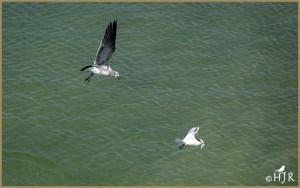
- Laughing Gull & Royal Tern
-

- This pirate gull, wrestles the fish from tern.
-

- The Laughing Gull flying with the fish, no sweat! and not funny!
© HJ Ruiz – Avian101
Share this:

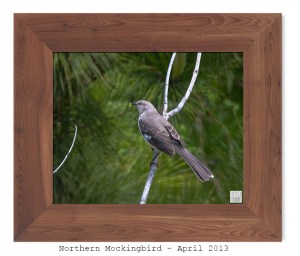
Framed Memories # 26
Photo Gallery

© HJ Ruiz – Avian101
Share this:

Photography of Birds – Set # 194
Set # 194
Blue Jays
-
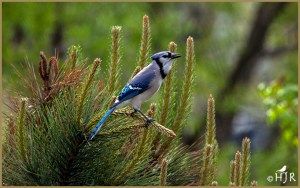
- Blue Jay
-

- Blue Jays
The Blue jay (Cyanocitta cristata) is a passerine bird in the family Corvidae, native to eastern North America. It lives in most of the eastern and central United States; eastern populations may be migratory. Resident populations are also found in Newfoundland, Canada; breeding populations are found across southern Canada. It breeds in both deciduous and coniferous forests, and is common in residential areas. It is predominantly blue, with a white chest and underparts and a blue crest; it has a black, U-shaped collar around its neck and a black border behind the crest. Males and females are similar in size and plumage, and plumage does not vary throughout the year. Four subspecies have been recognized.
© HJ Ruiz – Avian101
Share this:

Photography of Birds – Set # 193
Set # 193
Boat-Tailed Grackle
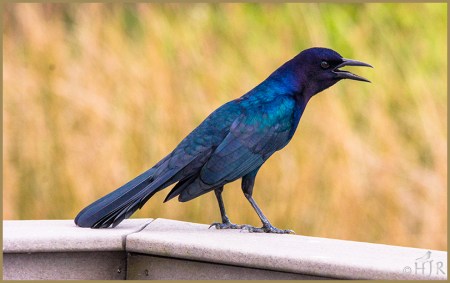
Boat-Tailed Grackle (M)
The Boat-tailed Grackle (Quiscalus major) is a passerine bird of the family Icteridae found as a permanent resident on the coasts of the Southeastern United States. It is found in coastal saltwater marshes and, in Florida, also on inland waters. The nest is a well-concealed cup in trees or shrubs near water; three to five eggs are laid.
Common Grackle

Common Grackle (M)
The Common Grackle (Quiscalus quiscula) is a large icterid found in large numbers through much of North America. First described in 1758 by Carl Linnaeus, the common grackle has three subspecies. Adult common grackles have a long and dark bill, pale yellow eyes, and a long tail. Adults often have an iridescent appearance on their head, especially males. Common grackles are found in much of North America east of the Rocky Mountains.
© HJ Ruiz – Avian101
Share this:

Read Past Reviews

Book # 69
Quote from the Author
“A good chuckle is healthy, it helps you break the monotony of a serious life.” ~ H.J. Ruiz
 H.J. Ruiz - Avian101
You must be logged in to post a comment.