
Photography of Birds – Set # 201
Set # 201
Great Blue Heron
-
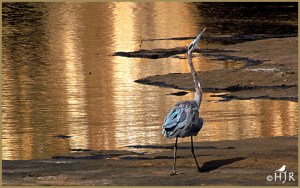
- Great Blue Heron
-
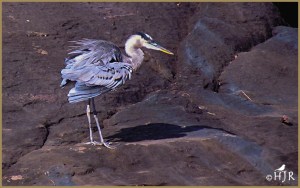
- Great Blue Heron
The Great Blue Heron (Ardea herodias) is a large wading bird in the heron family Ardeidae, common near the shores of open water and in wetlands over most of North America and Central America, as well as the Caribbean and the Galápagos Islands. It is a rare vagrant to coastal Spain, the Azores, and areas of far southern Europe. An all-white population found in south Florida and the Florida Keys is known as the great white heron. Debate exists about whether this represents a white color morph of the great blue heron, a subspecies of it, or an entirely separate species. The status of white individuals known to occur elsewhere in the Caribbean, and very rarely elsewhere in eastern North America, is unclear.
© HJ Ruiz – Avian101
Share this:

Photography of Birds – Set # 200
Set # 200
Northern Mockingbird
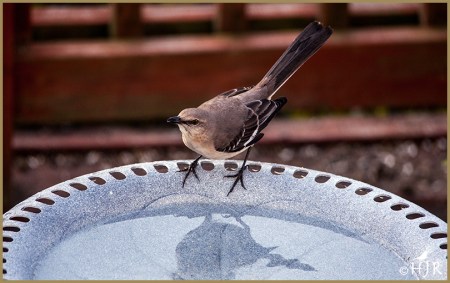
Northern Mockingbird
The Northern Mockingbird (Mimus polyglottos) is the only mockingbird commonly found in North America. This bird is mainly a permanent resident, but northern birds may move south during harsh weather. This species has rarely been observed in Europe. This species was first described by Carl Linnaeus in his 1758 10th edition of Systema Naturae as Turdus polyglottos. The northern mockingbird is known for its mimicking ability, as reflected by the meaning of its scientific name, “many-tongued thrush”. The northern mockingbird has gray to brown upper feathers and a paler belly. Its tail and wings have white patches which are visible in flight.
Loggerhead Shrike
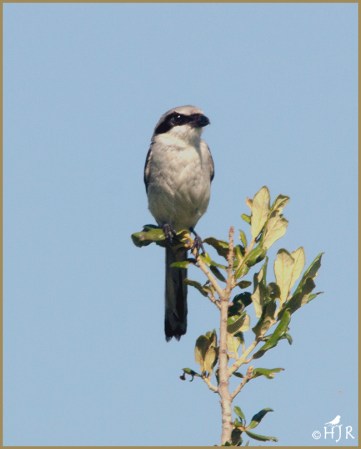
Loggerhead Shrike
The Loggerhead Shrike (Lanius ludovicianus) is a passerine bird in the family Laniidae. It is one of two members of the shrike family endemic to North America; the related northern shrike (L. borealis) occurs north of its range. It is nicknamed the butcherbird after its carnivorous tendencies, as it consumes prey such as amphibians, insects, lizards, small mammals and small birds, and some prey end up displayed and stored at a site, for example in a tree. Due to its small size and weak talons, this predatory bird relies on impaling its prey upon thorns or barbed wire for facilitated consumption. The numbers of loggerhead shrike have significantly decreased in recent years, especially in Midwestern, New England and Mid-Atlantic areas.
© HJ Ruiz – Avian101
Share this:

Framed Memories – # 27
Photo Gallery
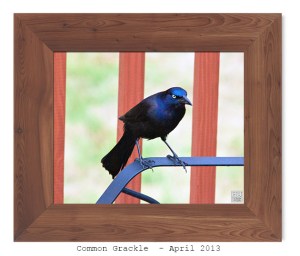

© HJ Ruiz – Avian101
Share this:

Photography of Birds – Set # 199
Set # 199
Black Skimmers
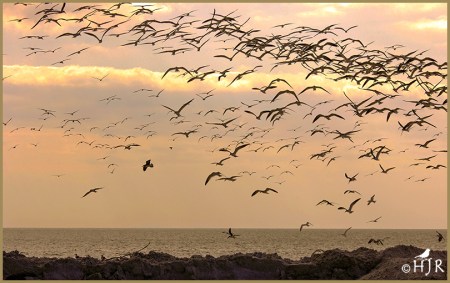
Black Skimmers
The Black Skimmer (Rynchops niger) is a tern-like seabird, one of three very similar birds species in the skimmer genus Rynchops in the gull family Laridae. It breeds in North and South America. Northern populations winter in the warmer waters of the Caribbean and the tropical and subtropical Pacific coasts, but the South American races make only shorter movements in response to annual floods which extend their feeding areas in the river shallows.
Magnificent Frigatebirds
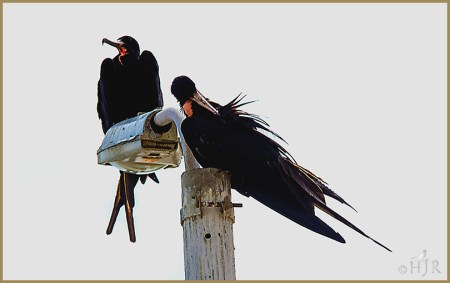
Magnificent Frigatebirds
The Magnificent Frigatebird (Fregata magnificens) or man o’ war is a seabird of the frigatebird family Fregatidae. With a length of 89–114 centimetres (35–45 in) and wingspan of 2.17–2.44 m (7.1–8.0 ft) it is the largest species of frigatebird. It occurs over tropical and subtropical waters off America, between northern Mexico and Perú on the Pacific coast and between Florida and southern Brazil along the Atlantic coast. There are also populations on the Galápagos Islands in the Pacific and the Cape Verde islands in the Atlantic.
© HJ Ruiz – Avian101
Share this:

Read Past Reviews

Book # 69
Quote from the Author
“A good chuckle is healthy, it helps you break the monotony of a serious life.” ~ H.J. Ruiz
 H.J. Ruiz - Avian101
You must be logged in to post a comment.