Red Art Gallery – Northern Cardinal – # 9
Red Art Gallery
-
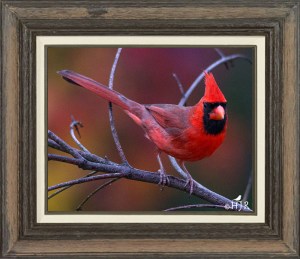
- Male
-
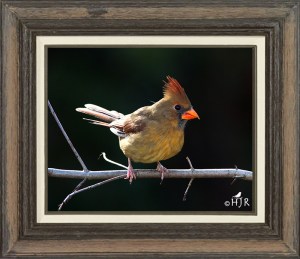
- Female
© HJ Ruiz – Avian101
Share this:

Photography of Birds – Set # 206
Set # 206
Great Blue Heron
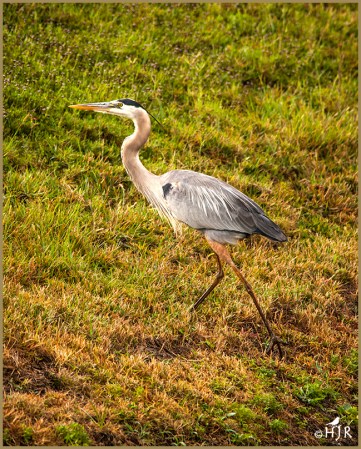
Great Blue Heron
The Great Blue Heron is found throughout most of North America, as far north as Alaska and the southern Canadian provinces in the summer. In winter, the range extends south through Florida, Mexico, and the Caribbean to South America. Birds east of the Rocky Mountains in the northern part of their range are migratory and winter in the coastal areas of the Southern United States, Central America, or northern South America. From the Southern United States southwards, and on the lower Pacific coast, they are year-round residents. However, their hardiness is such that individuals often remain through cold northern winters, as well, so long as fish-bearing waters remain unfrozen (which may be the case only in flowing water such as streams, creeks, and rivers).
Limpkin
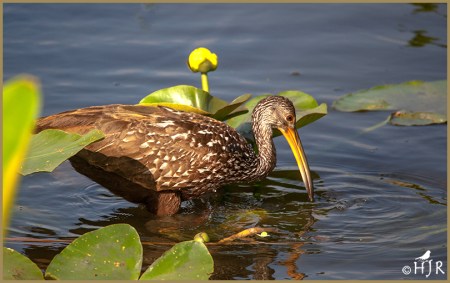
Limpkin
The Limpkin undertakes some localized migrations, although the extent of these is not fully understood. In some parts in the northern part of the range, females (and a few males) leave the breeding areas at the end of summer, returning at the end of winter In Brazil, birds breeding in some seasonal marshes leave during the dry season and return again with the rains. Birds may also migrate between Florida and Cuba, as several limpkins on the Florida Keys and Dry Tortugas have been reported, but these records may also represent vagrants or post-breeding dispersal. One study in Florida using wing tags found limpkins dispersed up to 325 km (202 mi) away from the breeding site. This tendency may explain vagrant limpkins seen in other parts of the United States and at sea near the Bahamas.
© HJ Ruiz – Avian101
Share this:

Photography of Birds – Set # 205
Set # 205
Laughing Gulls
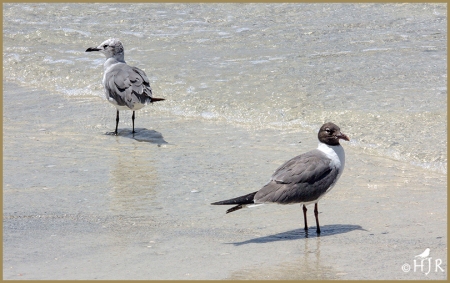
Laughing Gulls
The Laughing Gull (Leucophaeus atricilla) is a medium-sized gull of North and South America. Named for its laugh-like call, it is an opportunistic omnivore and scavenger. It breeds in large colonies mostly along the Atlantic coast of North America, the Caribbean, and northern South America. The two subspecies are: L. a. megalopterus – which can be seen from southeast Canada down to Central America, and L. a. atricilla which appears from the West Indies to the Venezuelan islands. The laughing gull was long placed in the genus Larus until its present placement in Leucophaeus, which follows the American Ornithologists’ Union.
Ring-billed Gull
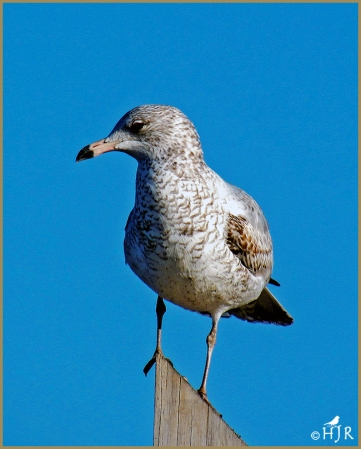
Ring-billed Gull
The Ring-billed Gull (Larus delawarensis) is a medium-sized gull. The genus name is from Latin Larus which appears to have referred to a gull or other large seabird. The specific delawarensis refers to the Delaware River. The head, neck and underparts are white; the relatively short bill is yellow with a dark ring; the back and wings are silver gray; and the legs are yellow. The eyes are yellow with red rims. This gull takes three years to reach its breeding plumage; its appearance changes with each fall molt. The average lifespan of an individual that reaches adulthood is 10.9 years.
© HJ Ruiz – Avian101
Share this:

Framed Memories – # 28
Photo Gallery


© HJ Ruiz – Avian101
Share this:

Read Past Reviews

Book # 69
Quote from the Author
“A good chuckle is healthy, it helps you break the monotony of a serious life.” ~ H.J. Ruiz
 H.J. Ruiz - Avian101
You must be logged in to post a comment.