Photography of Birds – Set # 219
Set # 219
Rock Pigeon
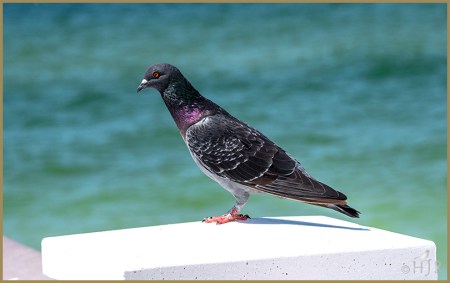
Rock Pigeon
Rock Pigeons feed on the ground in flocks or individually. Pigeons are naturally granivorous, eating seeds that fit down their gullet. They may sometimes consume small invertebrates such as worms or insect larvae as a protein supplement. As they do not possess an enlarged cecum as in European wood pigeons, they cannot digest adult plant tissue; the various seeds they eat containing the appropriate nutrients they require.
Royal Tern
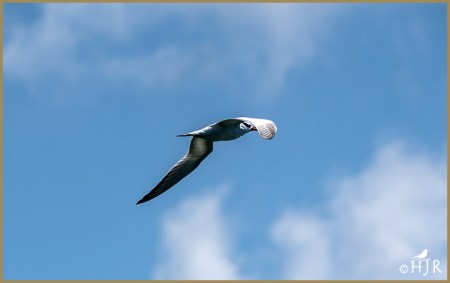
Royal Tern
In the Americas, the Royal Terns on the east coast, during the breeding season (April to July), occur in the US north to Virginia, occasionally drifting north to Long Island, New York. The southern end of their breeding range is Texas. The wintering range on the east coast is from North Carolina south to Panama and the Guianas, also the Caribbean islands. On the western coast of the Americas, the royal tern spends the breeding season from the US state of California to Mexico, wintering from California south to Peru.
© HJ Ruiz – Avian101
Share this:

Photography of Birds – Set # 218
Set # 218
Carolina Wren
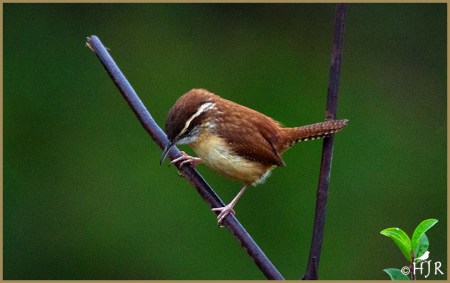
Carolina Wren
The Carolina Wrens are generally inconspicuous, avoiding the open for extended periods of time. When out in the open, they investigate their surroundings and are rarely stationary. After finding a mate, pairs maintain a territory and stay together for several years. Both males and females give out alarm calls, but only males sing to advertise territory.
Field Sparrow

Field Sparrow
The Field Sparrow is distributed across eastern Canada and the eastern United States, with northern populations migrating southwards to southern United States and Mexico in the fall. The typical habitat of this bird is bushy country with shrubs and grassland.
© HJ Ruiz – Avian101
Share this:

Framed Memories – # 31
Photo Gallery
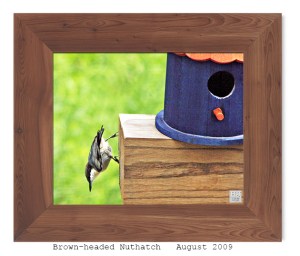
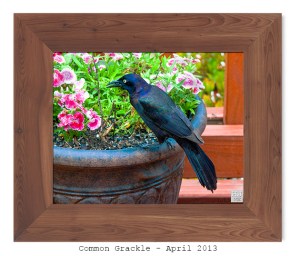
Share this:

Photography of Birds – Set # 217
Set # 217
American Purple Gallinule

American Purple Gallinule
The American Purple Gallinule (Porphyrio martinicus) is a swamphen in the genus Porphyrio. It is in the order Gruiformes, meaning “crane-like”, an order which also contains cranes, rails, and crakes. The purple gallinule is a rail species, placing it into the family Rallidae. It is also known locally as the yellow-legged gallinule. The specific name martinica denotes “of Martinique”
Laughing Gull
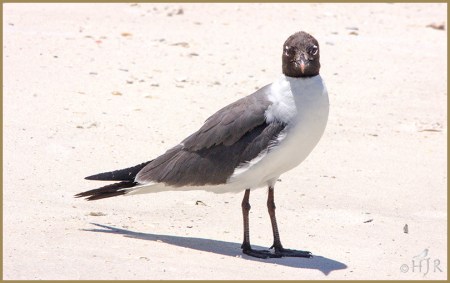
Laughing Gull
Laughing Gulls take three years to reach adult plumage. Immature birds are always darker than most similar-sized gulls other than Franklin’s. First-year birds are greyer below and have paler heads than first-year Franklin’s, and second-years can be distinguished by the wing pattern and structure.
© HJ Ruiz – Avian101
Share this:

Read Past Reviews

Book # 69
Quote from the Author
“A good chuckle is healthy, it helps you break the monotony of a serious life.” ~ H.J. Ruiz
 H.J. Ruiz - Avian101
You must be logged in to post a comment.