Red Art Gallery – Northern Cardinal # 13
Red Art Gallery
-
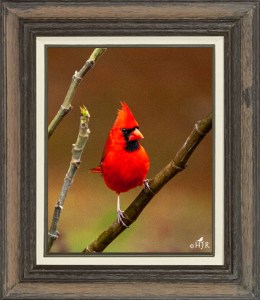
- Male
-
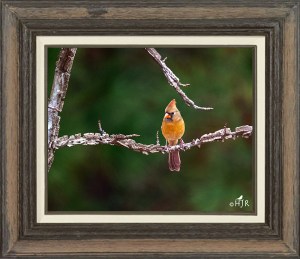
- Female
© HJ Ruiz – Avian101
Share this:

Photography of Birds – Set # 223
Set # 223
Red-shouldered Hawk
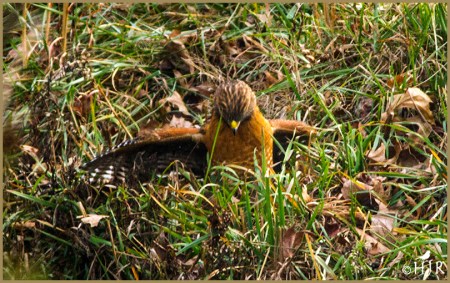
Red-shouldered Hawk
The Red-shouldered Hawk (Buteo lineatus) is a medium-sized hawk. Its breeding range spans eastern North America and along the coast of California and northern to northeastern-central Mexico. It is a permanent resident throughout most of its range, though northern birds do migrate, mostly to central Mexico. The main conservation threat to the widespread species is deforestation.
Cooper’s Hawk

Cooper’s Hawk
Generally, Cooper’s Hawks can be considered secretive, often perching within the canopy, but can use more open perches, especially in the western part of the range or in winter when they may use leafless or isolated trees, utility poles or exposed stumps. On perched hawks, the wing-tips tend to appear to cover less than one third of the tail, sometimes seeming to barely cover the covert feathers. As adults, they may be a solid blue-gray or brown-gray color above. Adults usually have a well-defined crown of blackish-brown feathers above a paler nape and hind-neck offset against their streaked rufous cheeks.Their tail is blue-gray on top and pale underneath, barred with three black bands in a rather even pattern and ending in a rather conspicuous white tip.
© HJ Ruiz – Avian101
Share this:

Photography of Birds – Set # 222
Set # 222
Red-breasted Nuthatch
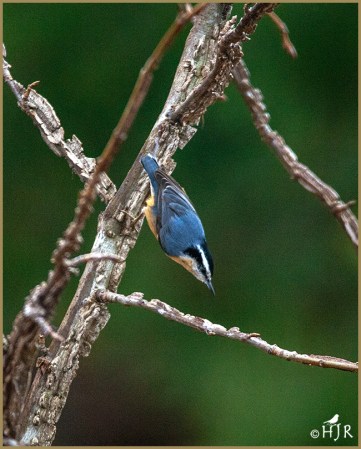
Red-breasted Nuthatch
The Red-breasted Nuthatch’s diet changes depending on the season. In the summer, it eats mostly insects, occasionally even fly-catching, while in the winter, it switches to conifer seeds. At feeders it will take sunflower seeds, peanut butter, and suet. It often wedges food pieces in bark crevices in order to break them up with the bill (as opposed to holding the food in their feet, like the black-capped chickadee does).
Brown-headed Nuthatch
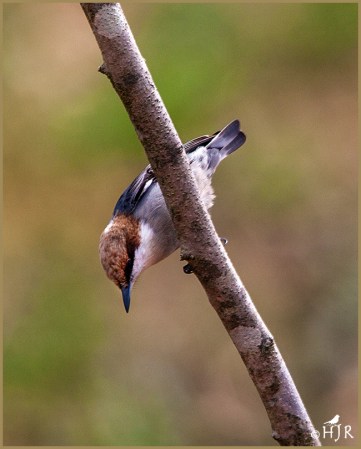
Brown-headed Nuthatch
The bird is regularly observed using a small chips of bark, small twigs, and pine needles held in its beak as tools to dig for insects. The nuthatch exhibits other curious behaviors such a cooperative groups where groups of 3-5 adults provide care at a single nest. Recent genetic assessments suggest some of the putatively non-breeding adults associated with these groups may actually breed with individuals in neighboring territories. This nuthatch also exhibits a wide range of other social behaviors that include social grooming and male-female duets similar to those observed for the Pygmy Nuthatch.
© HJ Ruiz – Avian101
Share this:

Framed Memories – # 32
Photo Gallery
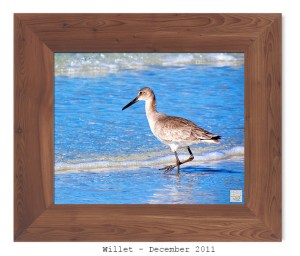
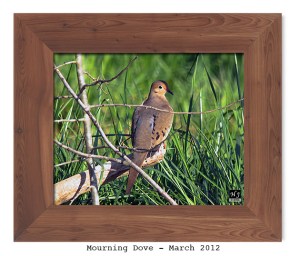
© HJ Ruiz – Avian101
Share this:

Read Past Reviews

Book # 69
Quote from the Author
“A good chuckle is healthy, it helps you break the monotony of a serious life.” ~ H.J. Ruiz
 H.J. Ruiz - Avian101
You must be logged in to post a comment.