
Red Art Gallery – Northern Cardinal # 14
Red Art Gallery
-
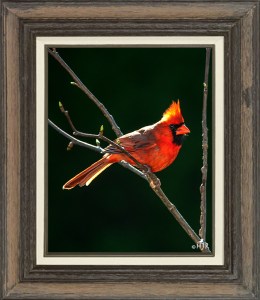
- Male
-

- Female
© HJ Ruiz – Avian101
Share this:

Book Review # 61 – Birds of East Africa (Second Edition)
Birds of East Africa (Second Edition)
Kenya, Tanzania,Uganda, Rwanda, Burundi
Author:
Terry Stevenson & John Fanshawe – Illustrated by John Gale & Brian Small
Publisher:
Princeton University Press
Brief Review:
This helpful guide on its second edition, is bringing us a whopping 1448 species of birds from countries located East of Africa. These countries are:
- Kenya
- Tanzania
- Uganda
- Rwanda
- Burundi
This guide, a compilation of comprehensive and important information about each of the species, there are 3500 images illustrated and 289 color plates.
The authors of this guide, Terry Stevenson and John Fanshawe work has been revised and updated from the successful award-winning First Edition.
There is an Endemic Birds list followed with maps and an Index. The guide has 640 pages.
Reviewed by:
H.J. Ruiz -Avian101.Wordpress.com – January 29th, 2021
© HJ Ruiz – Avian101
Share this:

Photography of Birds – Set # 227
Set # 227
Glossy Ibis
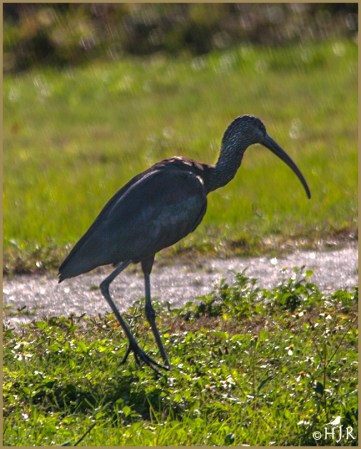
Glossy Ibis
This is the most widespread ibis species, breeding in scattered sites in warm regions of Europe, Asia, Africa, Australia, and the Atlantic and Caribbean regions of the Americas. It is thought to have originated in the Old World and spread naturally from Africa to northern South America in the 19th century, from where it spread to North America. The Glossy Ibis was first found in the New World in 1817 (New Jersey). Audubon saw the species just once in Florida in 1832. It expanded its range substantially northwards in the 1940s and to the west in the 1980s. This species is migratory; most European birds winter in Africa, and in North America birds from north of the Carolinas winter farther south. Though generally suspected to be a migratory species in India, the glossy ibis is resident in western India.
Great Egret

Great Egret
The Great Egret is generally a very successful species with a large and expanding range, occurring worldwide in temperate and tropical habitats. It is ubiquitous across the Sun Belt of the United States and in the Neotropics. In North America, large numbers of great egrets were killed around the end of the 19th century so that their plumes could be used to decorate hats. Numbers have since recovered as a result of conservation measures. Its range has expanded as far north as southern Canada. However, in some parts of the southern United States, its numbers have declined due to habitat loss, particularly wetland degradation through drainage, grazing, clearing, burning, increased salinity, groundwater extraction and invasion by exotic plants. Nevertheless, the species adapts well to human habitation and can be readily seen near wetlands and bodies of water in urban and suburban areas.
© HJ Ruiz – Avian101
Share this:

Photography of Birds – Set # 226
Set # 226
Brown-headed Cowbirds
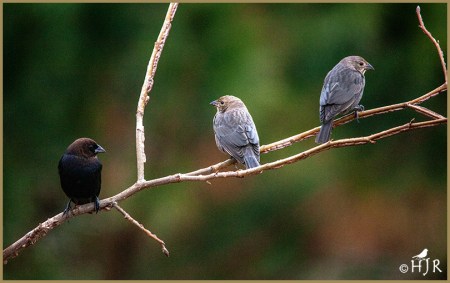
Brown-headed Cowbirds
The Brown-headed Cowbird is an obligate brood parasite; it lays its eggs in the nests of other small passerines (perching birds), particularly those that build cup-like nests. The brown-headed cowbird eggs have been documented in nests of at least 220 host species, including hummingbirds and raptors. The young cowbird is fed by the host parents at the expense of their own young. Brown-headed cowbird females can lay 36 eggs in a season. More than 140 different species of birds are known to have raised young cowbirds.
Purple Martins

Purple Martins
Purple Martins are sexually dimorphic. Adult males are entirely black with glossy steel blue sheen, the only swallow in North America with such coloration. Adult females are dark on top with some steel blue sheen, and lighter underparts. Adults have a slightly forked tail. Both male and female purple martins exhibit delayed plumage maturation, meaning it takes them two years before they acquire full adult plumage. Subadult females look similar to adult females minus the steel blue sheen and browner on the back. Subadult males look very much like females, but solid black feathers emerge on their chest in a blotchy, random pattern as they molt to their adult plumage.
© HJ Ruiz – Avian101
Share this:

Read Past Reviews

Book # 69
Quote from the Author
“A good chuckle is healthy, it helps you break the monotony of a serious life.” ~ H.J. Ruiz
 H.J. Ruiz - Avian101
You must be logged in to post a comment.