Photography of Birds – Set # 240
Set # 240
House Finches (M & F)
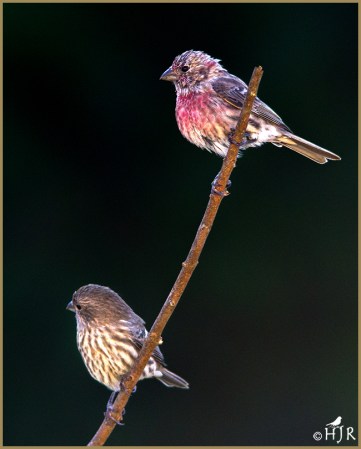
House Finches (M & F)
Adults House Finches have a long, square-tipped brown tail and are a brown or dull-brown color across the back with some shading into deep gray on the wing feathers. Breast and belly feathers may be streaked; the flanks usually are. In most cases, adult males’ heads, necks and shoulders are reddish. This color sometimes extends to the belly and down the back, between the wings. Male coloration varies in intensity with the seasons and is derived from the berries and fruits in its diet. As a result, the colors range from pale straw-yellow through bright orange (both rare) to deep, intense red. Adult females have brown upperparts and streaked underparts. Their song is a rapid, cheery warble or a variety of chirps.
Mourning Doves
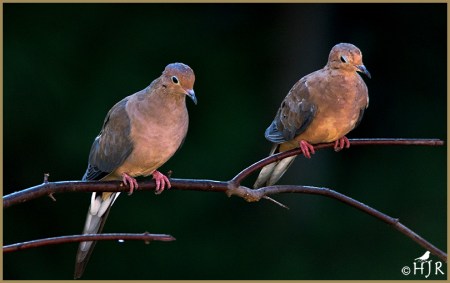
Mourning Doves
Mourning Doves are light grey and brown and generally muted in color. Males and females are similar in appearance. The species is generally monogamous, with two squabs (young) per brood. Both parents incubate and care for the young. Mourning doves eat almost exclusively seeds, but the young are fed crop milk by their parents.
© HJ Ruiz – Avian101
Share this:

Special Places # 8
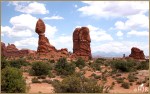
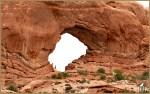
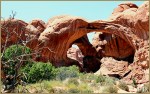
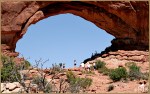
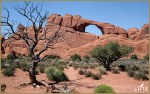
Arches National Park
Arches National Park is a national park in eastern Utah, United States. The park is adjacent to the Colorado River, 4 miles (6 km) north of Moab, Utah. More than 2,000 natural sandstone arches are located in the park, including the well-known Delicate Arch, as well as a variety of unique geological resources and formations. The park contains the highest density of natural arches in the world.
The park consists of 76,679 acres (119.811 sq mi; 31,031 ha; 310.31 km2) of high desert located on the Colorado Plateau. The highest elevation in the park is 5,653 feet (1,723 m) at Elephant Butte, and the lowest elevation is 4,085 feet (1,245 m) at the visitor center. The park receives an average of less than 10 inches (250 mm) of rain annually.
Administered by the National Park Service, the area was originally named a national monument on April 12, 1929, and was redesignated as a national park on November 12, 1971. The park received more than 1.6 million visitors in 2018
LocationGrand County, Utah, United States
Nearest city |
Moab, Utah |
Coordinates |
38.68333°N 109.56667° |
Area |
76,679 acres (119.811 sq mi; 31,031 ha; 310.31 km) |
Established |
April 12, 1929, as a national monument |
Visitors |
1,663,557 (in 2018) |
Governing body |
National Park Service |
Website |
Arches National Park |
Photo Gallery
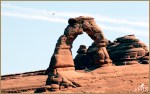
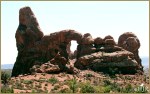
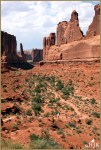
© HJ Ruiz – Avian101
Share this:

Red Art Gallery – Northern Cardinal # 17
Red Art Gallery
Photo Gallery
-
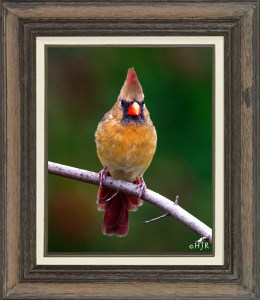
- Female
-
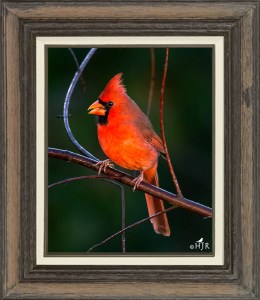
- Male
© HJ Ruiz – Avian101
Share this:

Photography of Birds – Set # 239
Set # 239
Northern Mockingbird

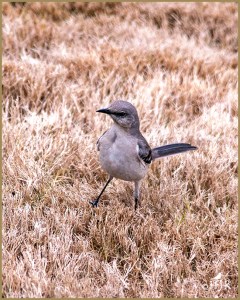
In the 19th century, the range of the Northern Mockingbird expanded northward towards provinces such as Nova Scotia and Ontario and states such as Massachusetts, although the sightings were sporadic. Within the first five decades of the 20th century, regions that received an influx of mockingbirds were Maine, Vermont, Ohio, Iowa, and New York. In western states such as California, the population was restricted to the Lower Sonoran regions but by the 1970s the mockingbird was residential in most counties. Islands that saw introductions of the mockingbird include Bermuda (in which it failed), Barbados, St. Helena, Socorro Island, the Cayman Islands and Tahiti.
© HJ Ruiz – Avian101
Share this:

Read Past Reviews

Book # 69
Quote from the Author
“A good chuckle is healthy, it helps you break the monotony of a serious life.” ~ H.J. Ruiz
 H.J. Ruiz - Avian101
You must be logged in to post a comment.