
Photography of Birds – Set # 244
Set # 244
Royal Tern
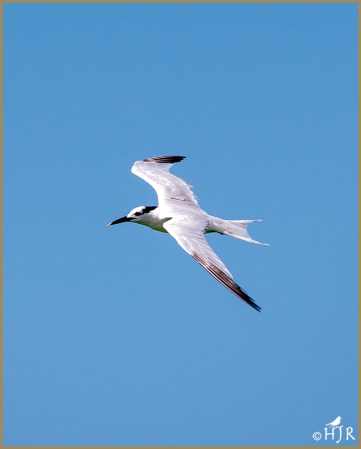
Royal Tern
In the Americas, the Royal Terns on the east coast, during the breeding season (April to July), occur in the US north to Virginia, occasionally drifting north to Long Island, New York. The southern end of their breeding range is Texas. The wintering range on the east coast is from North Carolina south to Panama and the Guyanas, also the Caribbean islands. On the western coast of the Americas, the royal tern spends the breeding season from the US state of California to Mexico, wintering from California south to Peru.
Laughing Gull
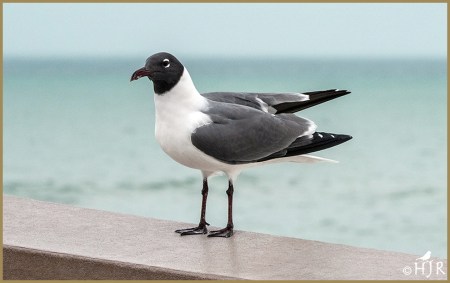
Laughing Gull
The Laughing Gull (Leucophaeus atricilla) is a medium-sized gull of North and South America. Named for its laugh-like call, it is an opportunistic omnivore and scavenger. It breeds in large colonies mostly along the Atlantic coast of North America, the Caribbean, and northern South America. The two subspecies are: L. a. megalopterus – which can be seen from southeast Canada down to Central America, and L. a. atricilla which appears from the West Indies to the Venezuelan islands. The laughing gull was long placed in the genus Larus until its present placement in Leucophaeus, which follows the American Ornithologists’ Union.
© HJ Ruiz – Avian101
Share this:

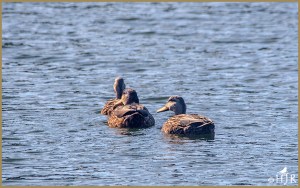
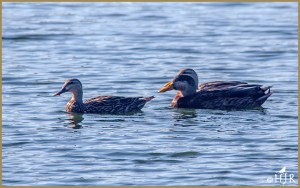
Bird’s ID # 228 – Mexican Duck
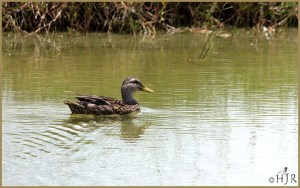
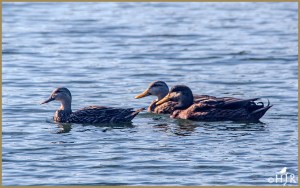
Mexican Duck
The Mexican Duck (Anas diazi, and see below) is a species of dabbling duck that breeds in Mexico and the southwestern United States. Most of the population is resident, but some northern birds migrate south to Mexico in winter. The species also occurs widely, but in limited numbers, in Colorado in all seasons and there are photographs of birds referable to this taxon from Utah, Wyoming, Nebraska, and Montana.
It is a bird of most wetlands, including ponds and rivers, and usually feeds by dabbling for plant food or grazing. It nests usually on a river bank, but not always particularly near water.
Mexican ducks are fond of the green shoots of alfafa and feed at night on irrigated fields.
Both sexes of this 51–56 cm length bird resemble a female mallard, but with a slightly darker body. The Mexican duck is mainly brown, with a blue speculum edged with white, obvious in flight or at rest. The male has a brighter yellow bill than the female.
The male has a nasal call, whereas the female has the very familiar “quack” commonly associated with ducks.
Including the Mexican duck in the mallard is a relic from the usual practice of much of the mid-late 20th century, when all North American “mallardines” as well as the Hawaiian and Laysan ducks were included in the mallard proper as subspecies. This was based on the assumption that hybridization, producing fertile offspring, is an indicator of lack of speciation.
Rather, in these birds it indicates a fairly recent allopatric radiation, which has not yet established solid barriers against gene flow on the molecular level; mate choice is conferred by cues of behavior and plumage in the mallardine ducks, and this, under natural conditions, has precluded a strong selective pressure towards establishment of genetic incompatibility.
Photo Gallery

© HJ Ruiz – Avian101
Share this:

Special Places # 9
Photo Art by H.J. Ruiz
Photo Gallery
-

- Old hub carriage wheel
-

- Practical hen
-

- Ready for ascension of hot-air balloon
-

- Old bottles and sunlight
-

- Upside-down armada
-

- Wee insect on huge flower
© HJ Ruiz – Avian101
Share this:

Red Art Gallery – Northern Cardinal # 18
Red Art Gallery
Photo Gallery
-
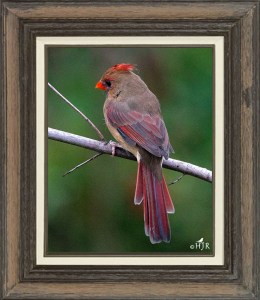
- Female
-
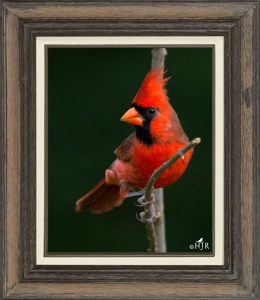
- Male
© HJ Ruiz – Avian101
Share this:

Read Past Reviews

Book # 69

Quote from the Author
“A good chuckle is healthy, it helps you break the monotony of a serious life.” ~ H.J. Ruiz
 H.J. Ruiz - Avian101
You must be logged in to post a comment.