Framed Memories # 39
Photo Gallery
© HJ Ruiz – Avian101
Share this:

Photography of Birds – Set # 247
Set # 247
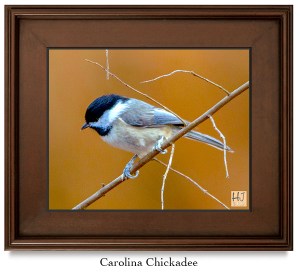
Carolina Chickadee

Carolina Chickadee
Carolina Chickadees hop along tree branches searching for insects, sometimes hanging upside down or hovering; they may make short flights to catch insects in the air. Insects form a large part of their diet, especially in summer; seeds and berries become important in winter. They sometimes hammer seeds on a tree or shrub to open them; they also will store seeds for later use.
During the fall migration and winter, chickadees often flock together. Many other species of birds, including titmice, nuthatches, and warblers can often be found foraging in these flocks. Mixed flocks stay together because the chickadees call out whenever they find a good source of food. This calling out forms cohesion for the group, allowing the other birds to find food more efficiently.
Northern Mockingbird

Northern Mockingbird
The Northern Mockingbird is an omnivore. The birds’ diet consists of arthropods, earthworms, berries, fruits, seeds, and occasionally lizards. Mockingbirds can drink from puddles, river and lake edges, or dew and rain droplets that amass onto plants. Adult mockingbirds also have been seen drinking sap from the cuts on recently pruned trees. Its diet heavily consists of animal prey during the breeding season, but takes a drastic shift to fruits during the fall and winter. The drive for fruits amid winter has been noted for the geographic expansion of the mockingbird, and in particular, the fruit of Rosa multiflora, a favorite of the birds, is a possible link. Mockingbirds also eat garden fruits such as tomatoes, apples, and berries.
© HJ Ruiz – Avian101
Share this:

Bird’s ID # 229
Fish Crow
The Fish Crow (Corvus ossifragus) is a species of crow associated with wetland habitats in the eastern and southeastern United States.
The fish crow is superficially similar to the American crow, but is smaller (36–41 cm in length) and has a silkier, smoother plumage by comparison. The upperparts have a blue or blue-green sheen, while the underparts have a more greenish tint to the black. The eyes are dark brown. The differences are often only really apparent between the two species when seen side by side or when heard calling. The bill is usually somewhat slimmer than the American crow, but is only readily distinguishable if both species are seen together
he voice is the most outwardly differing characteristic for this species and other American crow species. The call of the fish crow has been described as a nasal “ark-ark-ark” or a begging “waw-waw”. Birders often distinguish the two species (in areas where their range overlaps) with the mnemonic aid “Just ask him if he is an American crow. If he says “no”, he is a fish crow.” referring to the fact that the most common call of the American crow is a distinct “caw caw”, while that of the fish crow is a nasal “nyuh unh”
This species occurs on the eastern seaboard of the United States from Rhode Island south to Key West, and west along the northern coastline of the Gulf of Mexico and follows many river systems inland for quite some distance. Coastal marshes and beaches, rivers, inland lakes and marshes, river banks, and the land immediately surrounding all are frequented.
Photo Gallery


© HJ Ruiz – Avian101
Share this:

Special Places # 10
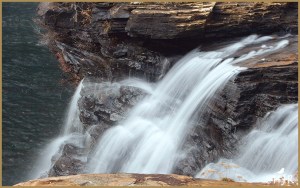
Cascades
Photo Gallery

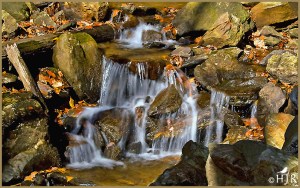
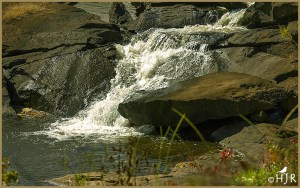
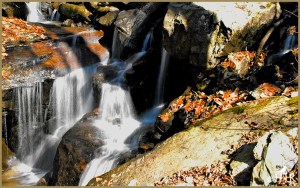

© HJ Ruiz – Avian101
Share this:

Read Past Reviews

Book # 69
Quote from the Author
“A good chuckle is healthy, it helps you break the monotony of a serious life.” ~ H.J. Ruiz
 H.J. Ruiz - Avian101
You must be logged in to post a comment.