
Photography of Birds – Set # 258
Set # 258
Brown Pelican
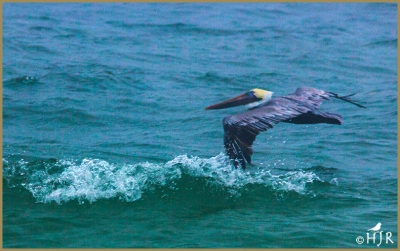
Brown Pelican
The Brown Pelican is the national bird of Saint Martin, Barbados, Saint Kitts and Nevis, and the Turks and Caicos Islands, and the official state bird of Louisiana, appearing on the flag, seal, or coat of arms of each. It has been rated as a species of least concern by the International Union for Conservation of Nature. It was listed under the United States Endangered Species Act from 1970 to 2009, as pesticides such as dieldrin and DDT threatened its future in the Southeastern United States and California. In 1972, the use of DDT was banned in Florida, followed by the rest of the United States. Since then, the brown pelican’s population has increased. In 1903, Theodore Roosevelt set aside the first National Wildlife Refuge, Florida’s Pelican Island, to protect the species from hunters.
Great Blue Heron
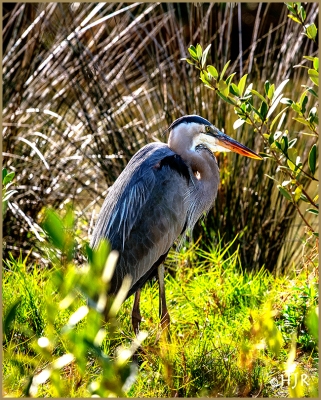
Great Blue Heron
Notable features of Great Blue Herons include slaty (gray with a slight azure blue) flight feathers, red-brown thighs, and a paired red-brown and black stripe up the flanks; the neck is rusty-gray, with black and white streaking down the front; the head is paler, with a nearly white face, and a pair of black or slate plumes runs from just above the eye to the back of the head. The feathers on the lower neck are long and plume-like; it also has plumes on the lower back at the start of the breeding season. The bill is dull yellowish, becoming orange briefly at the start of the breeding season, and the lower legs are gray, also becoming orangey at the start of the breeding season. Immature birds are duller in color, with a dull blackish-gray crown, and the flank pattern is only weakly defined; they have no plumes, and the bill is dull gray-yellow.
© HJ Ruiz – Avian101
Share this:

Special Places # 13
Zion National Park
Zion National Park is an American national park located in southwestern Utah near the town of Springdale. A prominent feature of the 229-square-mile (590 km2) park is Zion Canyon, which is 15 miles (24 km) long and up to 2,640 ft (800 m) deep. The canyon walls are reddish and tan-colored Navajo Sandstone eroded by the North Fork of the Virgin River. The lowest point in the park is 3,666 ft (1,117 m) at Coalpits Wash and the highest peak is 8,726 ft (2,660 m) at Horse Ranch Mountain. Located at the junction of the Colorado Plateau, Great Basin, and Mojave Desert regions, the park has a unique geography and a variety of life zones that allow for unusual plant and animal diversity. Numerous plant species as well as 289 species of birds, 75 mammals (including 19 species of bat), and 32 reptiles inhabit the park’s four life zones: desert, riparian, woodland, and coniferous forest. Zion National Park includes mountains, canyons, buttes, mesas, monoliths, rivers, slot canyons, and natural arches.
Human habitation of the area started about 8,000 years ago with small family groups of Native Americans, one of which was the semi-nomadic Basketmaker Anasazi (c. 300 CE). Subsequently, the Virgin Anasazi culture (c. 500) and the Parowan Fremont group developed as the Basketmakers settled in permanent communities. Both groups moved away by 1300 and were replaced by the Parrusits and several other Southern Paiute subtribes. Mormons came into the area in 1858 and settled there in the early 1860s. In 1909, President William Howard Taft named the area Mukuntuweap National Monument in order to protect the canyon. In 1918, the acting director of the newly created National Park Service, Horace Albright, drafted a proposal to enlarge the existing monument and change the park’s name to Zion National Monument, Zion being a term used by the Mormons. According to historian Hal Rothman: “The name change played to a prevalent bias of the time. Many believed that Spanish and Indian names would deter visitors who, if they could not pronounce the name of a place, might not bother to visit it. The new name, Zion, had greater appeal to an ethnocentric audience.” On November 19, 1919, Congress redesignated the monument as Zion National Park, and the act was signed by President Woodrow Wilson. The Kolob section was proclaimed a separate Zion National Monument in 1937, but was incorporated into the national park in 1956.
The geology of the Zion and Kolob canyons area includes nine formations that together represent 150 million years of mostly Mesozoic-aged sedimentation. At various periods in that time warm, shallow seas, streams, ponds and lakes, vast deserts, and dry near-shore environments covered the area. Uplift associated with the creation of the Colorado Plateau lifted the region 10,000 feet (3,000 m) starting 13 million years ago.
Location |
Washington, Kane, and Iron counties, Utah, United States |
Nearest city |
Springdale (south), Orderville (east) and Cedar City near Kolob Canyons entrance |
Coordinates |
37°18′N 113°00′W |
Area |
146,597 acres (229.058 sq mi; 59,326 ha; 593.26 km2) |
Established |
November 19, 1919 |
Visitors |
4,488,268 (in 2019 |
Governing body |
National Park Service |
Photo Gallery


© HJ Ruiz – Avian101
Share this:

Red Art Gallery – Northern Cardinal # 22
Red Art Gallery
Photo Gallery
-
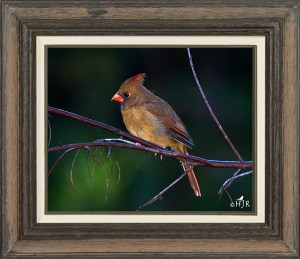
- Female
-
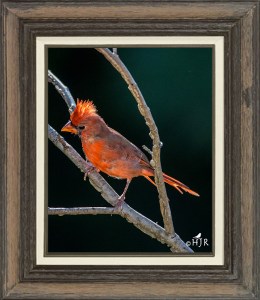
- Male
© HJ Ruiz – Avian101
Share this:

Photography of Birds – Set # 257
Set # 257
American Robin
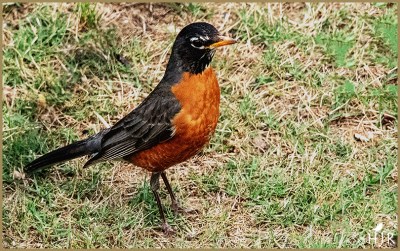
American Robin
The American Robin breeds throughout most of North America, from Alaska and Canada southward to northern Florida and Mexico. While robins occasionally overwinter in the northern part of the United States and southern Canada, most migrate to winter south of Canada from Florida and the Gulf Coast to central Mexico, as well as along the Pacific Coast. Most depart south by the end of August and begin to return north in February and March (exact dates vary with latitude and climate). The distance by which robins migrate varies significantly depending on their initial habitat; a study found that individual robins tagged in Alaska are known to travel as much as 3.5x further across seasons than robins tagged in Massachusetts.
Brown Thrasher
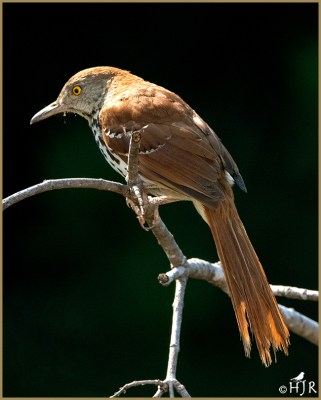
Brown Thrasher
Brown Thrashers are typically monogamous birds, but mate-switching does occur, at times during the same season. Their breeding season varies by region. In the southeastern United States, the breeding months begin in February and March, while May and June see the commencement of breeding in the northern portion of their breeding range. When males enter the breeding grounds, their territory can range from 2 to 10 acres (0.81 to 4.05 ha). Around this time of the year the males are usually at their most active, singing loudly to attract potential mates, and are found on top of perches. The courting ritual involves the exchanging of probable nesting material. Males will sing gentler as they sight a female, and this enacts the female to grab a twig or leaf and present it to the male, with flapping wings and chirping sounds. The males might also present a gift in response and approach the female. Both sexes will take part in nest building once mates find each other, and will mate after the nest is completed.
© HJ Ruiz – Avian101
Share this:

Read Past Reviews

Book # 69
Quote from the Author
“A good chuckle is healthy, it helps you break the monotony of a serious life.” ~ H.J. Ruiz
 H.J. Ruiz - Avian101
You must be logged in to post a comment.