
Photography of Birds – Set # 266
Set # 266
Blue Jays
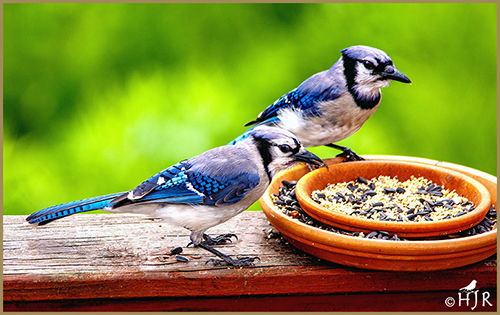
The Blue Jay can be beneficial to other bird species, as it may chase predatory birds, such as hawks and owls, and will scream if it sees a predator within its territory. It has also been known to sound an alarm call when hawks or other dangers are near, and smaller birds often recognize this call and hide themselves away accordingly. It may occasionally impersonate the calls of raptors, especially those of the red-tailed and red-shouldered hawks, possibly to test if a hawk is in the vicinity, though also possibly to scare off other birds that may compete for food sources.
Chipping Sparrows
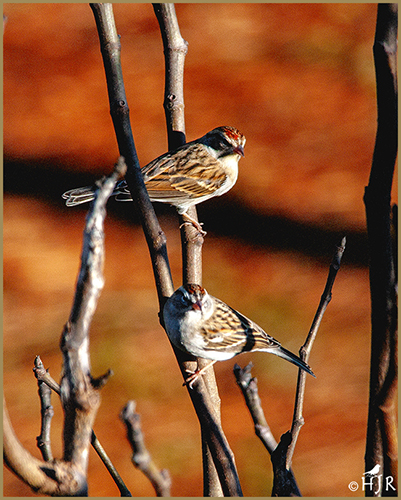
The male Chipping Sparrow start arriving at the breeding grounds from March (in more southern areas, such as Texas) to mid-May (in southern Alberta and northern Ontario). The female arrives one to two weeks later, and the male starts singing soon after to find and court a mate. After pair formation, nesting begins (within about two weeks of the female’s arrival). Overall, the breeding season is from March till about August.
© HJ Ruiz – Avian101
Share this:

Special Places # 15
Photo Art by H.J. Ruiz
Photo Gallery




Top Left: Farms in Pennsylvania country side.
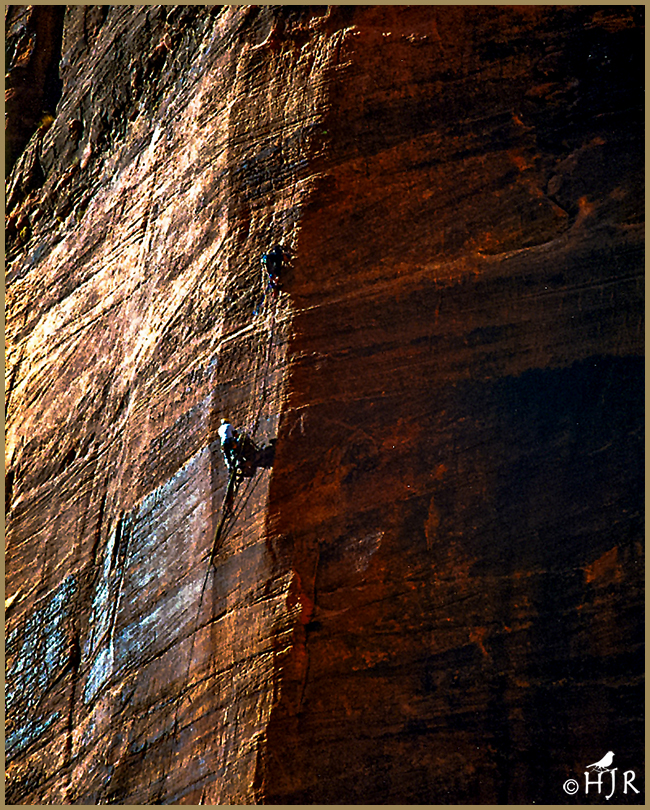
Top Right: Climbers at Zion National Park, Utah.
Middle Left: Scene of the Badlands National Park, South Dakota.
Middle Right: Scene of Autumn foliage at Quechee Gorge –”Little Grand Canyon”, Vermont.
Bottom Left: Bridge in Allatoona Lake, Georgia.
© HJ Ruiz – Avian101
Share this:

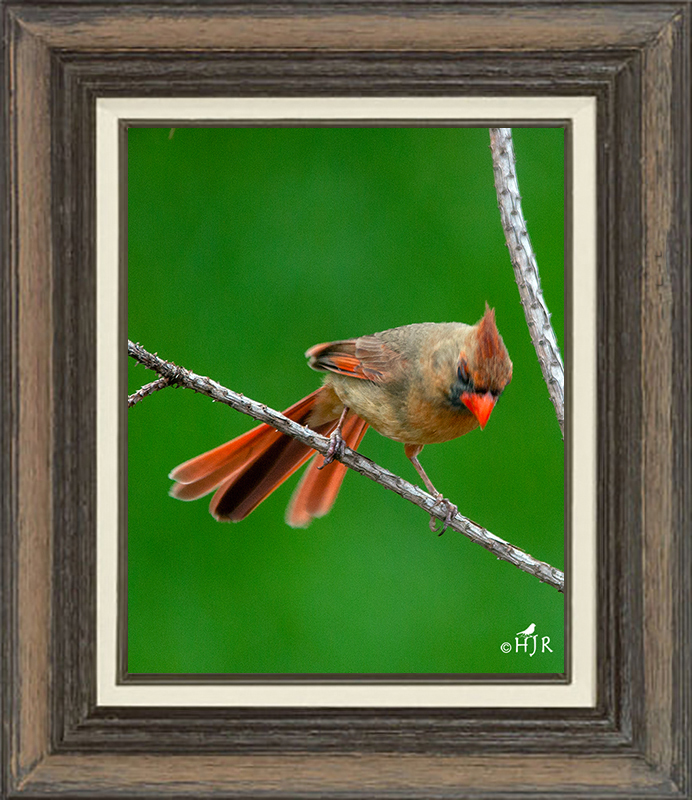
Red Art Gallery – Northern Cardinal # 24
Red Art Gallery
Photo Gallery

© HJ Ruiz – Avian101
Share this:

Photography of Birds – Set # 265
Set # 265
Osprey
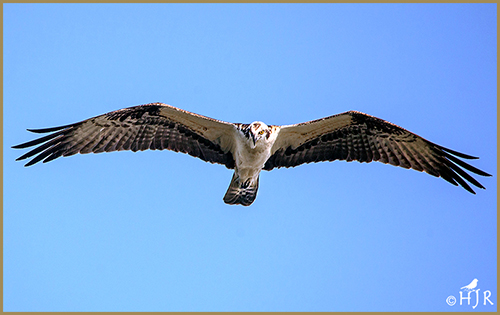
The Osprey is piscivorous, with fish making up 99% of its diet. It typically takes fish weighing 150–300 g (5.3–10.6 oz) and about 25–35 cm (9.8–13.8 in) in length, but the weight can range from 50 g (1.8 oz) to 2 kg (4.4 lb). Virtually any type of fish in that size range are taken.
Ospreys have vision that is well adapted to detecting underwater objects from the air. Prey is first sighted when the osprey is 10–40 m (33–131 ft) above the water, after which the bird hovers momentarily then plunges feet first into the water. They catch fish by diving into a body of water, often times completely submerging their entire bodies. As an osprey dives it adjusts the angle of its flight to account for the distortion of the fish’s image caused by refraction. Ospreys will typically eat on a nearby perch, but have also been known to carry fish for longer distances.
Red-winged Blackbird
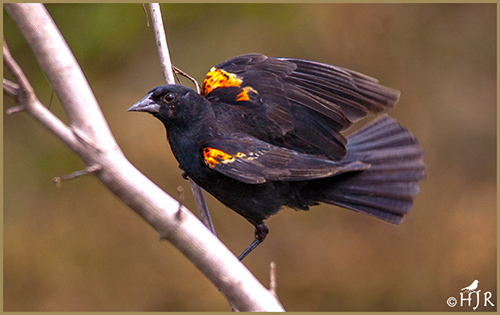
The male measures between 22 and 24 cm in length, while the female, 17 or 18 cm. Its wingspan is between 31 and 40 cm approximately. Both the peak male and the legs, the claws and the eyes are black; in the female beak is dark brown and clear in the upper half at the bottom, and the tail is medium in length and rounded. As in other species polygynous exists, the red-winged blackbird are considerable sexual dimorphism both in plumage and size, males weighing between 65 and 80g the females about 35g. Males are 50% heavier than females, 20% larger in its linear dimensions, and 20% larger compared to the length of their wings. The trend towards greater dimorphism in the size of non-monogamous ichterid species indicates that the larger size of males has evolved due to sexual selection.
© HJ Ruiz – Avian101
Share this:

Read Past Reviews

Book # 69

Quote from the Author
“A good chuckle is healthy, it helps you break the monotony of a serious life.” ~ H.J. Ruiz
 H.J. Ruiz - Avian101
You must be logged in to post a comment.