Neotropic Cormorant
The Neotropic Cormorant or olivaceous cormorant (Nannopterum brasilianum) is a medium-sized cormorant found throughout the American tropics and subtropics, from the middle Rio Grande and the Gulf and Californian coasts of the United States south through Mexico and Central America to southern South America, where it is called by the indigenous name of biguá. It also breeds in the Bahamas, Cuba, and Trinidad. It can be found both on coasts (including some mangrove areas) and in inland waters. There are at least two subspecies: N. b. mexicanum from Nicaragua northwards and N. b. brasilianum further south. In Peru, the neotropic cormorant is used by the Uru people for fishing. This bird is 64 cm (25 in) long with a 100 cm (39 in) wingspan. Adult males weigh from 1.1 to 1.5 kg (2.4 to 3.3 lb), adult females 50 to 100 g (1.8 to 3.5 oz) less. Birds of the southern populations tend to be bigger than the more northerly birds. It is small and slender, especially compared to the larger, heavier-looking double-crested cormorant. It has a long tail and frequently holds its neck in an S-shape. Adult plumage is mainly black, with a yellow-brown throat patch. During breeding, white tufts appear on the sides of the head, there are scattered white filoplumes on the side of the head and the neck, and the throat patch develops a white edge. The upper wings are somewhat grayer than the rest of the body. Juveniles are brownish in color.
Photo Gallery
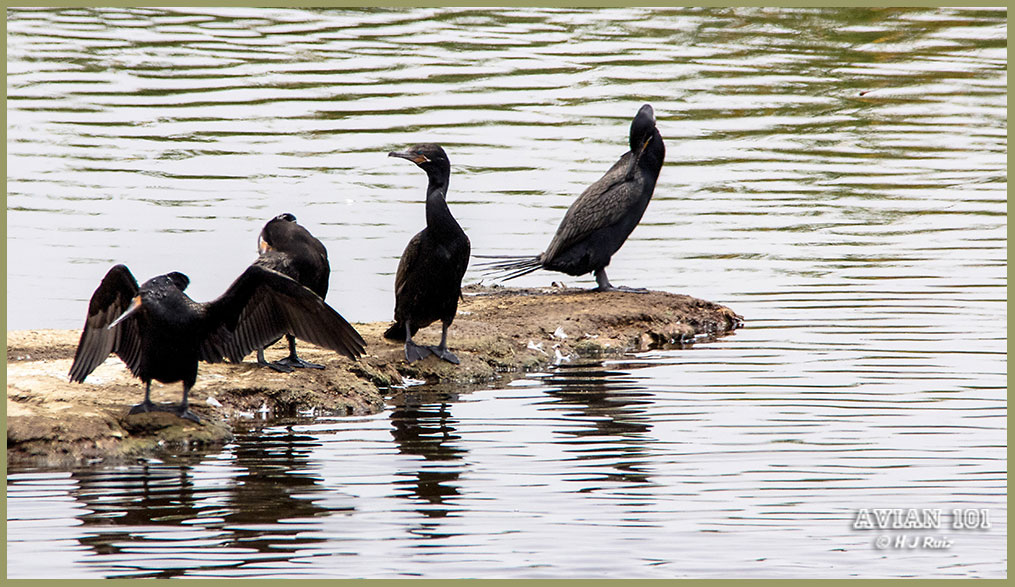
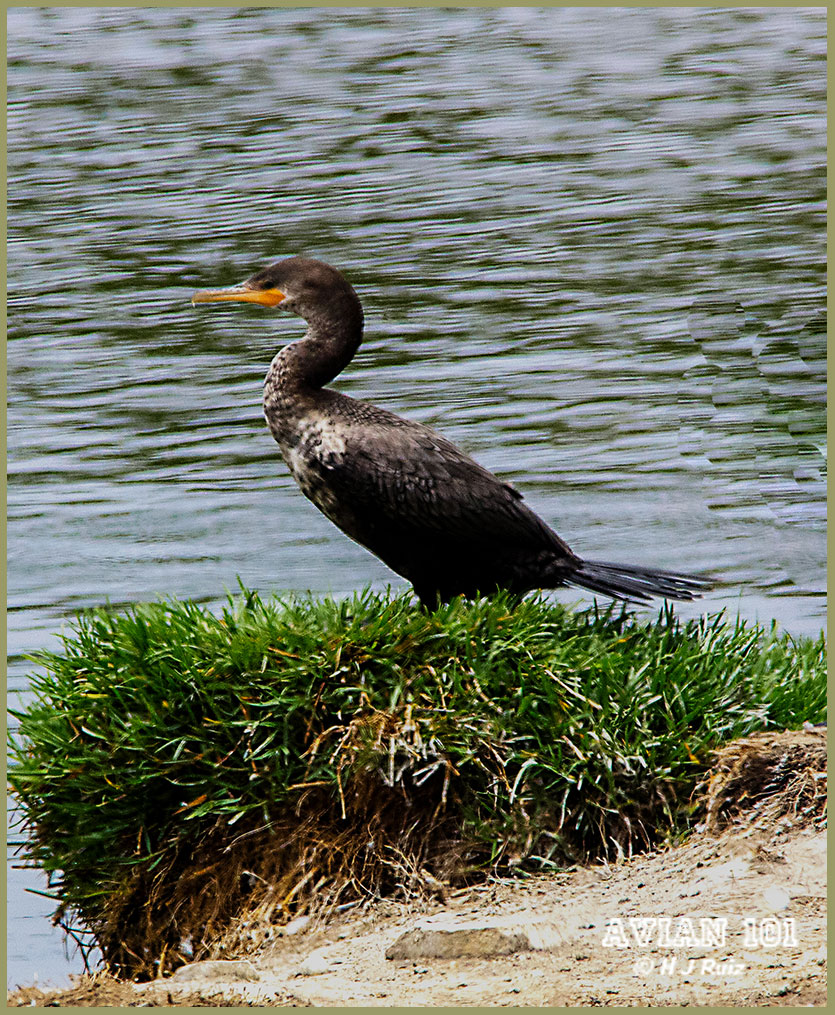
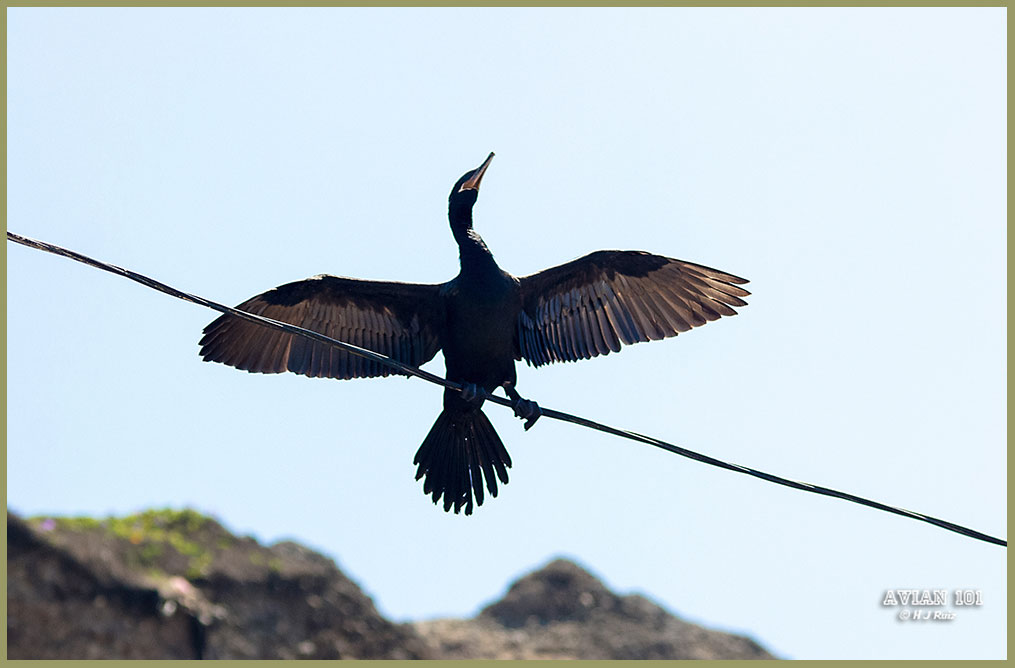
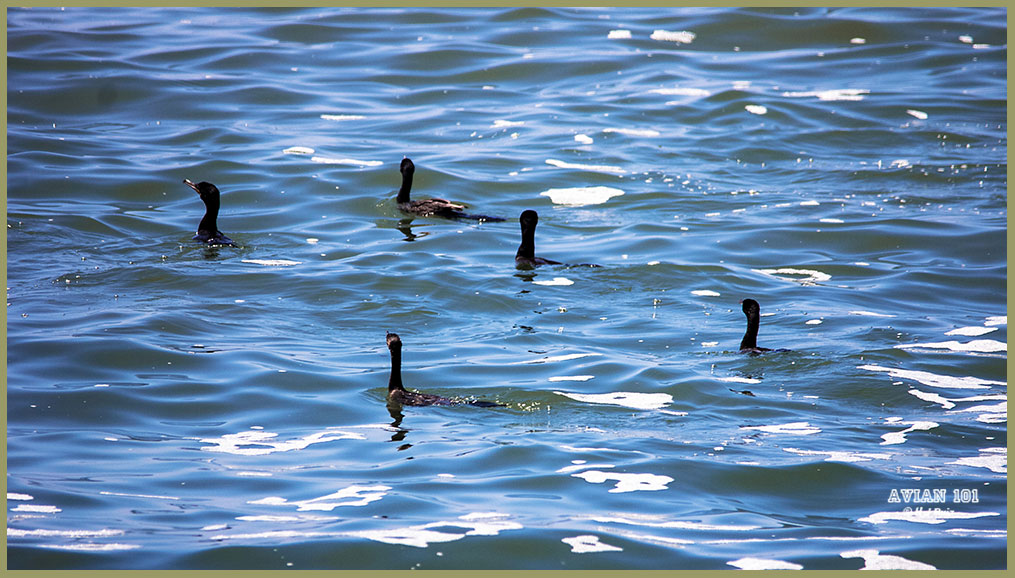

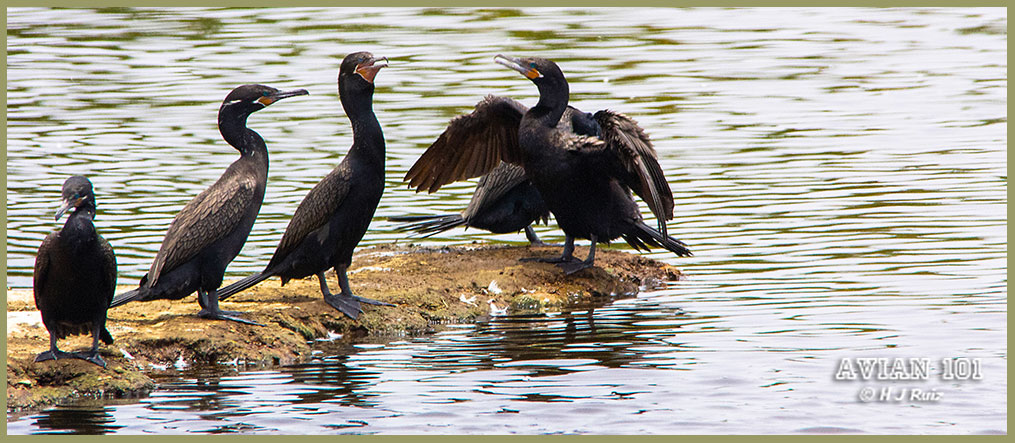
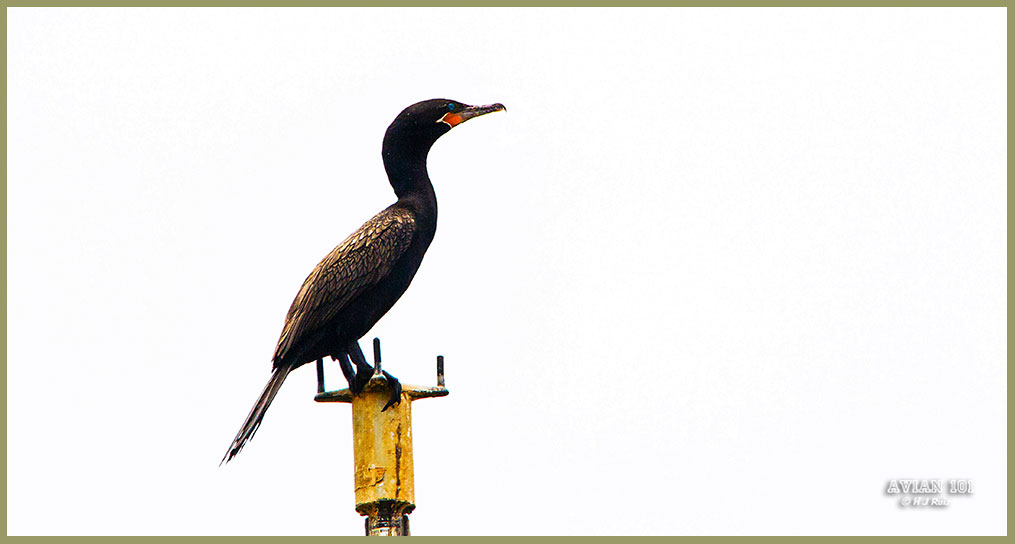
HJ Ruiz – November 24th, 2023


 H.J. Ruiz - Avian101
Cormorant…. a nightmare for identification. Not a lot of different between double crested and European, esecially if DC does not have his crests !
Around the world you have cormorants, they have different sizes, color patterns. They have been classified. They might have been connected many years ago. They have become different types of birds now. Thank you, John. 🙂
Very good HJ. I must do an Australian Cormorants post for I.J.’s Bird of the Week. It’s good to see all the birds of the world that people link to I.J.’s page
First of all, who is I.J. ? Thank you, BB 🙂
No worries. He has a blog about the Himalayas mainly but once a week he has a Bird of the Week and asks people to post a bird photo/s from their place or even ones they like. It would be easy for you to just link one of your posts as they are so good.
Here’s one I prepared earlier 😂