
Great Egret
The Great Egret (Ardea alba), also known as the common egret, large egret, or (in the Old World) great white egret or great white heron is a large, widely distributed egret. The four subspecies are found in Asia, Africa, the Americas, and southern Europe. Recently it is also spreading to more northern areas of Europe. Distributed across most of the tropical and warmer temperate regions of the world, it builds tree nests in colonies close to water.The great egret is a large heron with all-white plumage. Standing up to 1 m (3.3 ft) tall, this species can measure 80 to 104 cm (31 to 41 in) in length with a wingspan of 131 to 170 cm (52 to 67 in) Body mass can range from 700 to 1,500 g (1.5 to 3.3 lb), with an average around 1,000 g (2.2 lb). It is thus only slightly smaller than the great blue or grey heron (A. cinerea). Apart from size, the great egret can be distinguished from other white egrets by its yellow bill and black legs and feet, though the bill may become darker and the lower legs lighter in the breeding season. In breeding plumage, delicate ornamental feathers are borne on the back. Males and females are identical in appearance; juveniles look like nonbreeding adults. Differentiated from the intermediate egret (Ardea intermedia) by the gape, which extends well beyond the back of the eye in case of the great egret, but ends just behind the eye in case of the intermediate egret.
Photo Gallery
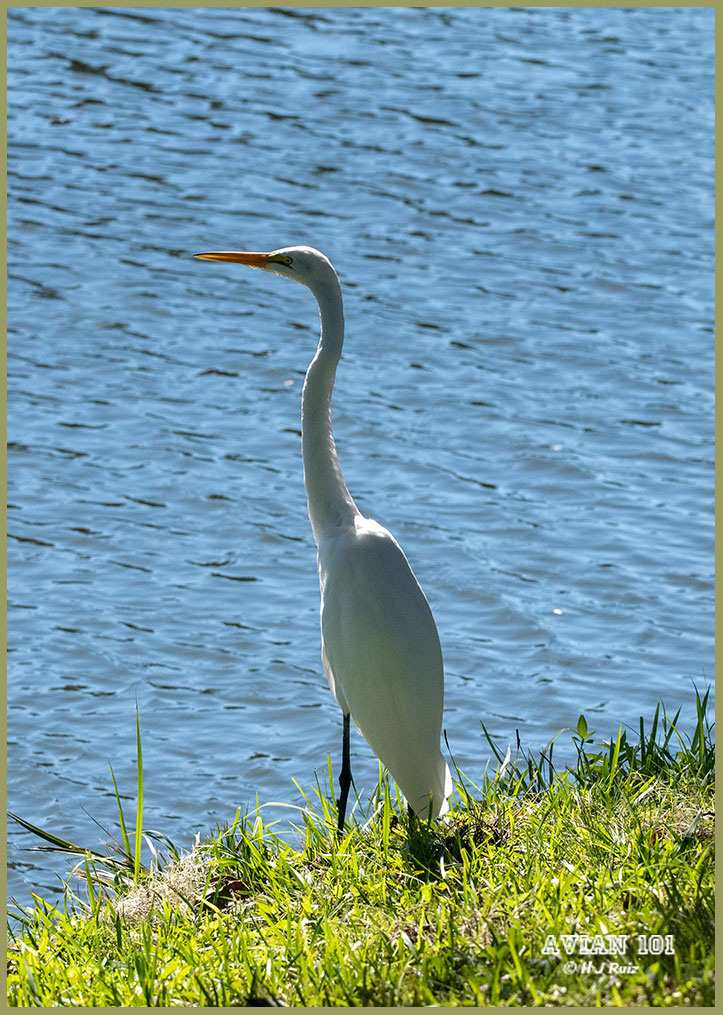
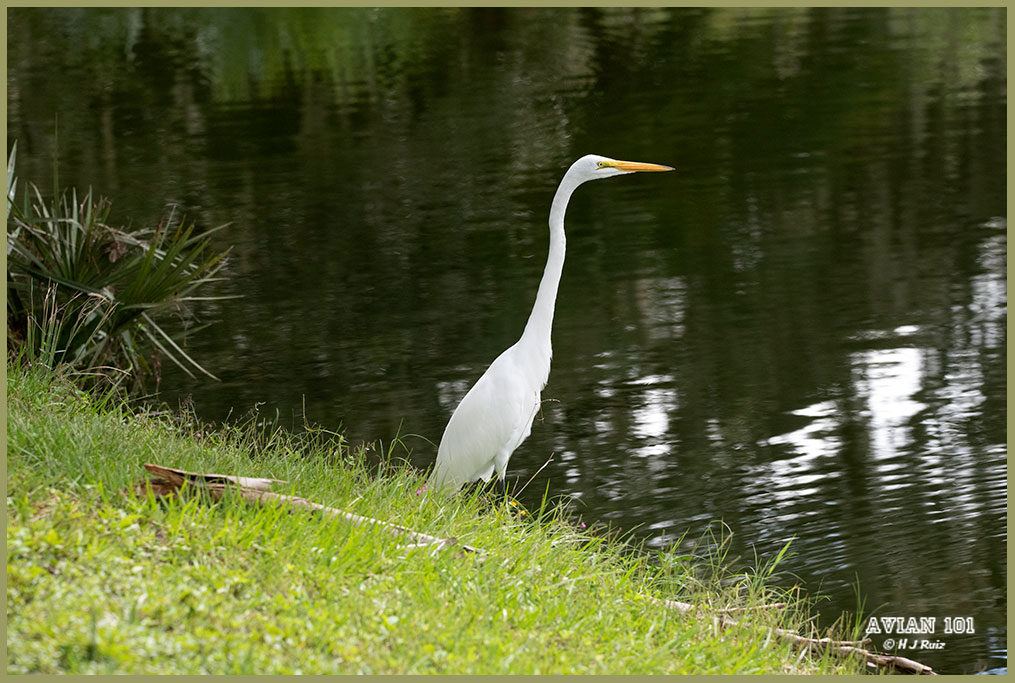
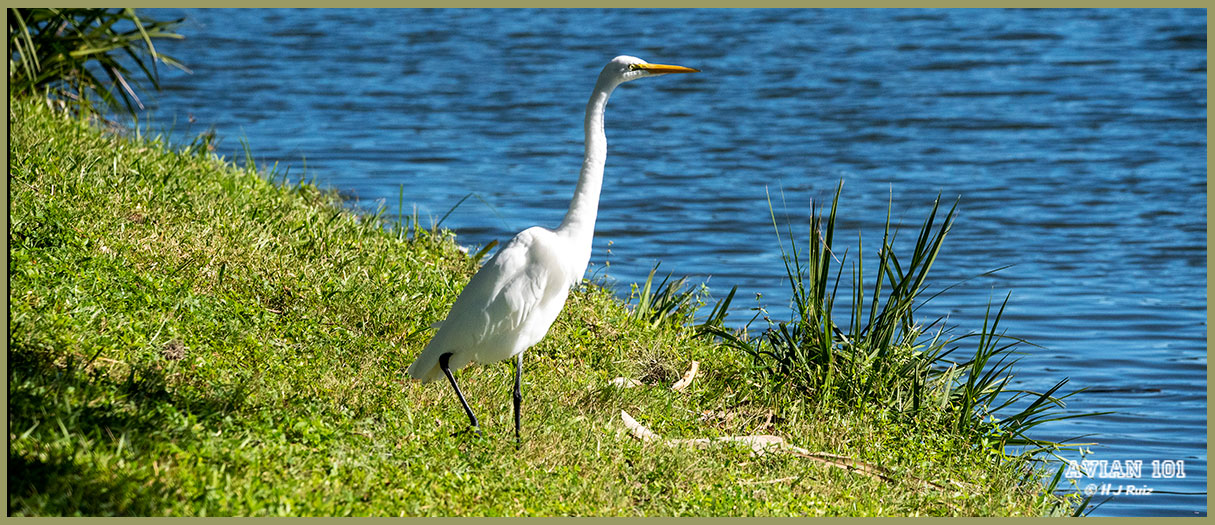
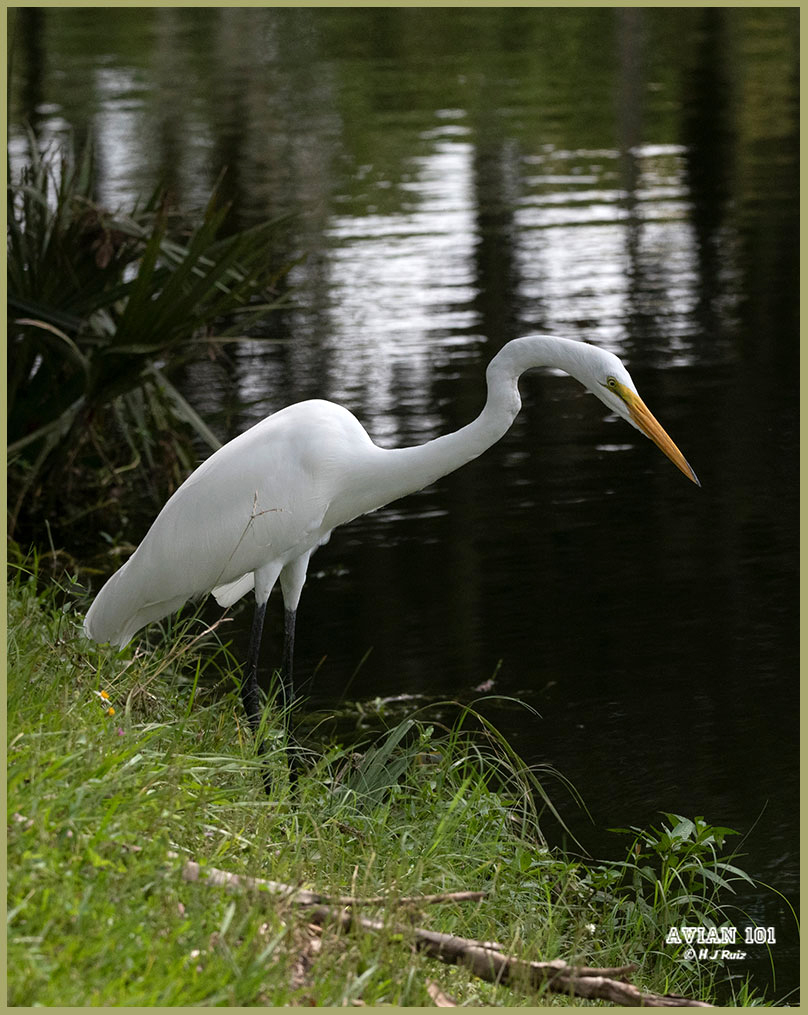

HJ Ruiz September 26th, 2023



 H.J. Ruiz - Avian101
What a nice collection of images. No matter the background, this is a bird that always makes for a dramatic portrait.
You are entirely right, they always pose with their cleanest plumage, and make the photographer look good! Thanks, Linda!
My grandma called them & Herons a ‘shy poke’ 65 yrs ago 😉
Grandmas always have some to say about anything, Don’t they?
I miss my Granny ♥️
cool shots 😎
Thank you, Washe! 🙂
What stately birds. GBH is still my favorite, but this is my second favorite. Thanks for sharing.
Thanks so much, K.
These are the most favorites from the waders…
A very beautiful bird. When I started bird watching in 1985, people would drive a hundred miles to see one. Now, they breed in Nottinghamshire in good numbers. That’s climate change!!
That’s not climate change! It’s procreating like rabbits. Don’t you that? 🙂
I didn’t realise that their reproduction rates were high. It sounds as if there’ll be quite a few about in five or ten years’ time.
Hardly a bird that goes unnoticed!
He is tall, with a plumage that is impeccable clean and poses for the camera…Yes!! Thanks D. 🙂
Lovely pictures of a most elegant bird, HJ.
You are right, I agree with that. Thank you, Tom!