
Sanderling
The photographs displayed on today’s post were shot on the beach in an island off the coast of Georgia.
The Sanderling is a small plump sandpiper. The winter bird is very pale, almost white apart from a dark shoulder patch. This is the source of the specific name, alba, which is the Latin for “white”. Later in the summer, the face and throat become brick-red.

Sanderling
The juvenile bird is spangled black and white, and shows much more contrast than the adult. Sanderling behavior is distinctive, but visually, if the size is misjudged, a breeding plumage sanderling can be mistaken for some varieties of stint, or a winter plumage sanderling can be mistaken for a Dunlin or Red Knot. It can be told from other small wading birds, given good views, by its lack of a hind toe. Sanderlings feed on invertebrate prey buried in the sand in the upper intertidal. In North America this largely consists of the isopods, and the mole crab. When the tide is out these crustaceans live in burrows some way beneath the surface. When the tide comes in, they move into the upper layers of sand so as to be able to feed on the plankton and detritus that washes over them with each wave. They then burrow rapidly down again as the water retreats.

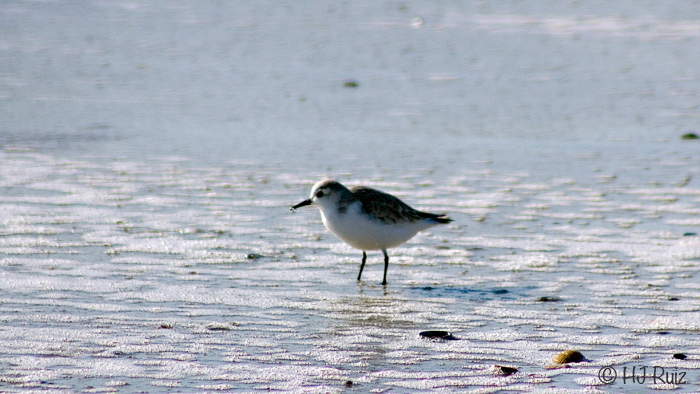
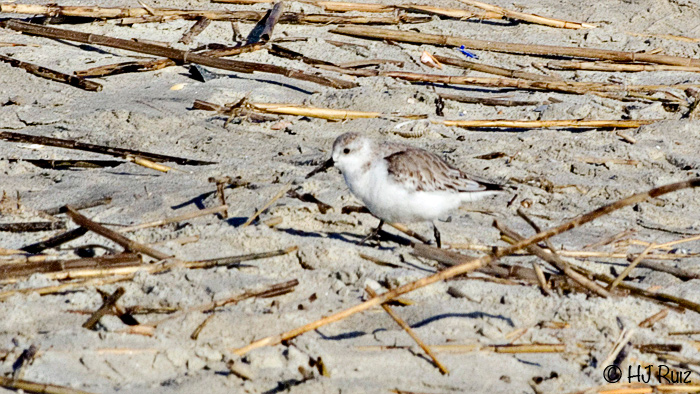
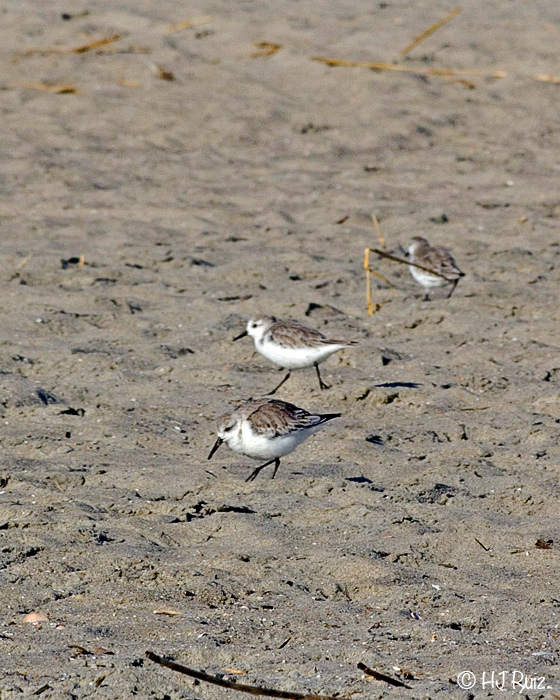
Click on images to see enlargements
Text and photographs © H.J. Ruiz – Avian 101



 H.J. Ruiz - Avian101
enjoying all these posts keep it up buddy.
Thanks Craig! 🙂