
Spotted Owl
Spotted Owl – Spec.Name: Strix occidentalis
This is a species of true owl. It is a resident species of forests in western North America, where it nests in tree holes, old bird of prey nests, or rock crevices. Nests can be between 13 and 66 yards (12 to 60 meters) high and usually contain two eggs (though some will contain as many as four). It is a strictly nocturnal owl, which feeds on small mammals and birds, which has only been discovered recently.
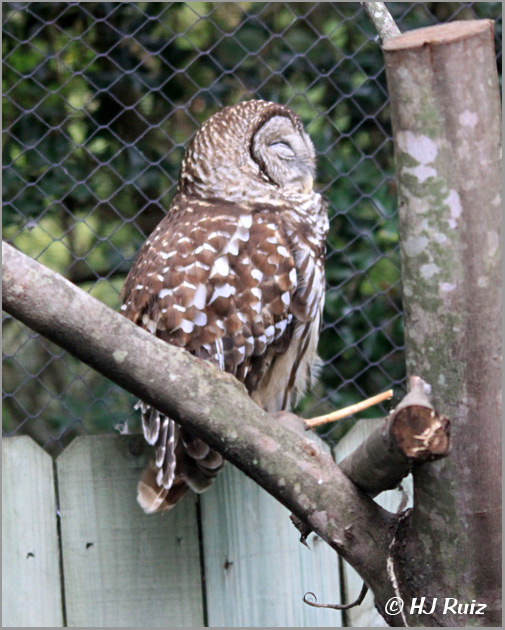
Spotted Owl
This owl has a length of 43 cm (17 inches), a wingspan of 114 cm (45 inches), and a weight of around 600 g (21 ounces). Its eggs are a little over 2 inches (50 mm) long, and are white and smooth with a slightly grainy texture. The female sits on the eggs and cares for the young, while the male provides food for them. Juvenile Spotted Owls have an average survival rate of 11%, with an average birth rate of .58 owls per pair.
The three sub-species of Strix occidentalis are Strix occidentalis caurina (Northern Spotted Owl), Strix occidentalis occidentalis (California Spotted Owl), and Strix occidentalis lucida (often referred to as the Mexican Spotted Owl). The Gila Wilderness is home to the largest population of the Mexican sub-species.
The Spotted Owl is similar in appearance to the Barred Owl but has cross-shaped markings on the underparts, whereas the Barred Owl is alternately barred on the breast and streaked on the belly. Barred Owls are larger and grayer than Spotted Owls. In recent years the California and Northern subspecies of Spotted Owl have been displaced by Barred Owls, which are more aggressive, have a broader diet and occur in more varied habitats. Though the two species may hybridize in areas where displacement is occurring, they are quite genetically distinct, for example, differing 13.9% in certain gene sequences.
Spotted owls are nocturnal, sit-and-wait predators. They often hunt from a perch and swoop or pounce on prey. They also grab arboreal prey from tree boles and limbs. They do occasionally hunt during the day and will hawk prey such as insects or bats.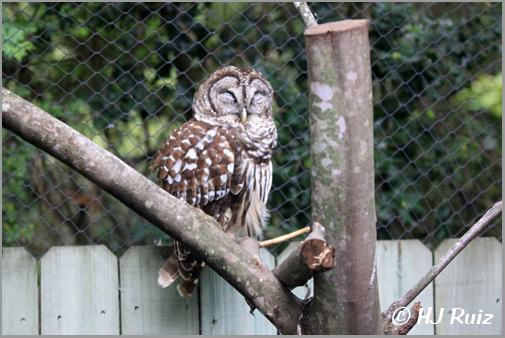
All photographs are © H.J. Ruiz – Avian101
Text is available under the Creative Commons Attribution-ShareAlike License; additional terms may apply. See Terms of use for details.


 H.J. Ruiz - Avian101
You must be logged in to post a comment.