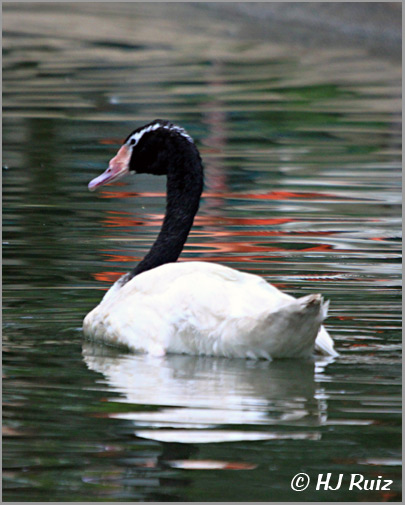
Black-necked Swan
Black-necked Swan – Spec. Name: Cygnus melancoryphus
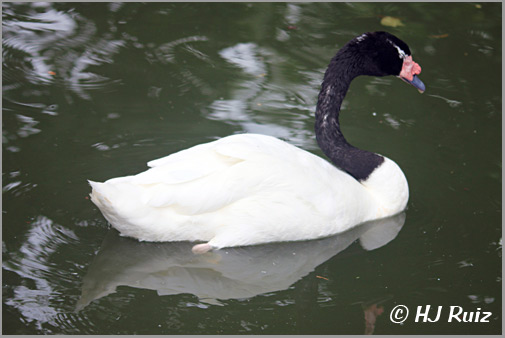
This is the largest waterfowl native to South America. Males are 115–140 cm (45–55 in) and 4.5-6.7 kg (10-14.8 lbs); females are 102–124 cm (40–49 in) and 3.5-4.4 kg (7.7–9.7 lbs). The wingspan is about 177 cm (70 in). The body plumage is white with a black neck, head and greyish. It has a red knob near the base of the bill and white stripe behind eye. The sexes are similar, with the female slightly smaller. The cygnet has a light grey plumage with black bill and feet. The Black-necked Swan was formerly placed in monotypic genus, Sthenelides.
Black-necked Swan
The smallest member in its genus, it is found in freshwater marshes, lagoon and lake shores in southern South America. The Black-necked Swan breeds in Zona Sur, Patagonia, Tierra del Fuego and on the Falkland Islands. In the austral winter, this species migrates northwards to Paraguay and southern Brazil. The wetlands created by the Great Chilean Earthquake like Carlos Anwandter Nature Sanctuary in Cruces River have become important population centers for the Black-necked Swan.
In 2004 and 2005 thousands of Black-necked Swans in the Carlos Anwandter Nature Sanctuary in Chile died or migrated away following major contamination by Valdivia Pulp Mill located on the Cruces River which feeds the wetlands. By August 2005 the birds in the Sanctuary had been “wiped out”; only four birds could be observed from a population formerly estimated at 5,000 birds. Autopsies on dead swans attributed the deaths to high levels of iron and other metals polluting the water.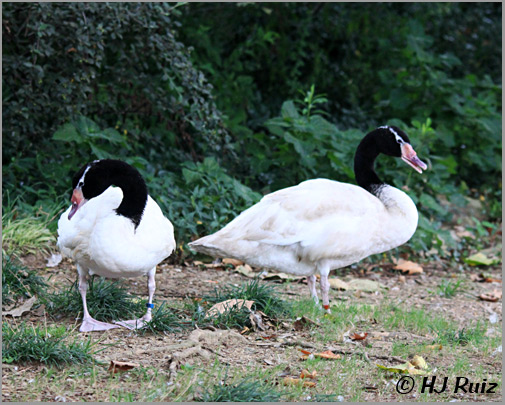
The Black-necked Swan, like its nearest relatives the Black and Mute Swan is relatively silent. Also, unlike most wildfowl, both parents regularly carry the cygnets on their backs. The female lays four to six eggs in a nest of vegetation mound. The diet consists mainly of vegetation, insects and fish spawn.
Widespread and common throughout its habitat, the Black-necked Swan is evaluated as Least Concern on the IUCN Red List of Threatened Species. It is listed on Appendix II of CITES.
 All photographs are © H.J. Ruiz – Avian101
Text is available under the Creative Commons Attribution-ShareAlike License; additional terms may apply. See Terms of use for details.


 H.J. Ruiz - Avian101
thanks for the lovely educational article…i hope they work hard to preserve this beautiful creature
Thank you Dr. Rayya for your kind words. I get happy when people show signs of caring for all creatures of Nature. 🙂