Do you know what guano is?
Guano(from the Quechua ‘wanu’, (dung) via Spanish) is the excrement (feces and urine) of seabirds, cave dwelling insectivorous bats, and seals. Guano manure is an effective fertilizer due to its high levels of phosphorus and nitrogen and also its lack of odor. It was an important source of nitrates for gunpowder. Soil that is deficient in organic matter can be made more productive by addition of this manure.
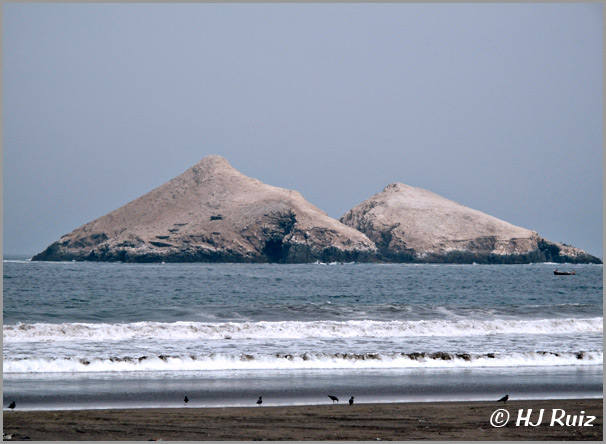
Guano islands
Guano consists of ammonium oxalate and urate, phosphates, as well as some earth salts and impurities. Guano also has a high concentration of nitrates. Bird guano has a fertilizer analysis of 11 to 16 percent nitrogen, 8 to 12 percent equivalent phosphoric acid, and 2 to 3 percent equivalent potash. Bat and seal guano are lower in fertilizer value than bird guano.
The word “guano” originates from the Quichua language of the Inca civilization and means “the droppings of sea birds”. Incas collected guano from the coast of Peru for use as soil enricher. The Incas assigned great value to guano, restricting access to it and punishing any disturbance to the birds with death.
Guano has been harvested over several centuries along the coast of Peru, where islands and rocky shores have been sheltered from humans and predators. The Guanay Cormorant has historically been the most important producer of guano; its guano is richer in nitrogen than guano from other seabirds. Other important guano producing species off the coast of Peru are the Peruvian Pelican and the Peruvian Booby.
In November 1802, Alexander von Humboldt studied guano and its fertilizing properties at Callao in Peru, and his subsequent writings on this topic made the subject known in Europe.
The high concentration of nitrates also made guano an important strategic commodity. The War of the Pacific(1879 to 1883) between the Peru-Bolivia alliance and Chile was primarily based upon Bolivia’s attempt to tax Chilean guano harvesters and over control of a part of the Atacama Desert that lies between the 23rd and 26th parallels on the Pacific coast. The discovery during the 1840s of the use of guano as a fertilizer and its Chile saltpetre content as a key ingredient in explosives made the area strategically valuable.
In this context the US passed the Guano Islands Act in 1856 giving citizens discovering a source of guano the right to take possession of unclaimed land and entitlement to exclusive rights to the deposits. However, the guano could only be removed for the use of citizens of the United States. This enabled US citizens to take possession of unoccupied islands containing guano.
By the end of the 19th century, the importance of guano declined with the rise of artificial fertiliser, although guano is still used by organic gardeners and farmers. Superphosphate made from guano is used for aerial topdressing.
In agriculture and gardening guano has a number of uses, including as: soil builder, lawn treatments, fungicide (when fed to plants through the leaves), nematicide (decomposing microbes help control nematodes), and as composting activator (nutrients and microbes speed up decomposition).
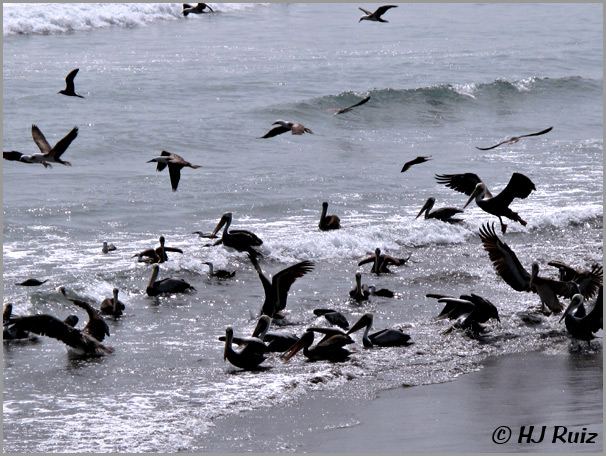
Guano producing birds
All photographs are © H.J. Ruiz – “My Backyard Visitors”
Text is available under the Creative Commons Attribution-ShareAlike License; additional terms may apply. See Terms of use for details.


 H.J. Ruiz - Avian101
You must be logged in to post a comment.