
Do you know about Sexual Dimorphism?
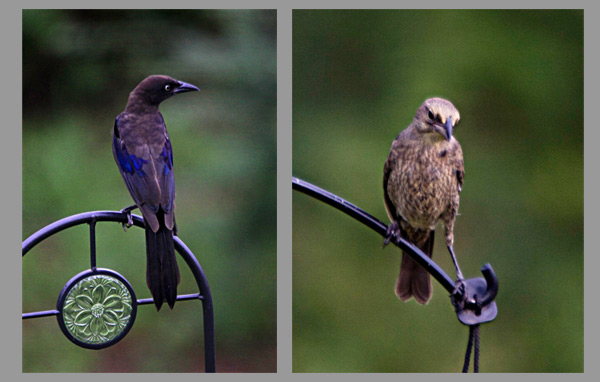
Common Grackle (M - F)
Sexual Dimorphism is a phenotypic difference between males and females of the same species. Examples of such differences include differences in morphology, ornamentation, and behavior.
A common type of dimorphism is ornamentation. Dichromatism is where a sex of a given species is more than one color including that of saturated, vibrant hues.
Exaggerated dimorphic traits are used predominately in the competition over mates. Ornaments are costly to produce or maintain but differ depending on the type of color mechanism involved.
One excellent example of this is in the Common Grackle The male has a very vibrant plumage which it uses to attract females. The male Grackle will use its vibrant plumage to court a mate. Same case with other species such as House Finches, Red-winged Blackbirds, Peafowls and many other birds.
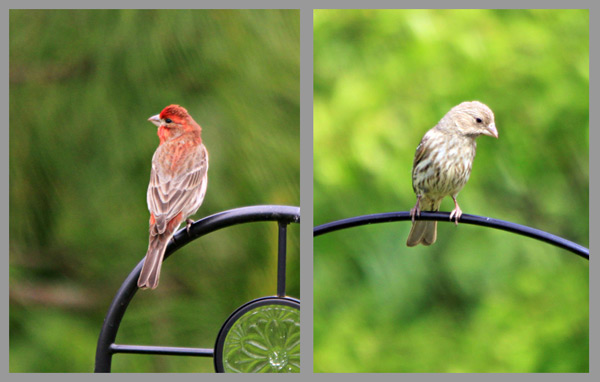
House Finch (M - F)
Sexual dimorphism in mammals and birds
The brains of many birds and mammals, including humans, are significantly different for males and females of the species. Both genes and hormones affect the formation of many animal brains before “birth” (or hatching), and also behaviour of adult individuals. Hormones significantly affect human brain formation, and also brain development at puberty. A 2004 review in Nature Reviews Neuroscienceobserved that “because it is easier to manipulate hormone levels than the expression of sex chromosome genes, the effects of hormones have been studied much more extensively, and are much better understood, than the direct actions in the brain of sex chromosome genes.” It concluded that while “the differentiating effects of gonadal secretions seem to be dominant,” the existing body of research “support the idea that sex differences in neural expression of X and Y genes significantly contribute to sex differences in brain functions and disease.

Red-winged Blackbird (M - F)
Photographs are © H.J. Ruiz – “My Backyard Visitors”


 H.J. Ruiz - Avian101
You must be logged in to post a comment.